AI Utility Mapping: How Utilities Are Building Better Together
Written by

Chris Garafola
Published on
.svg)
January 27, 2026
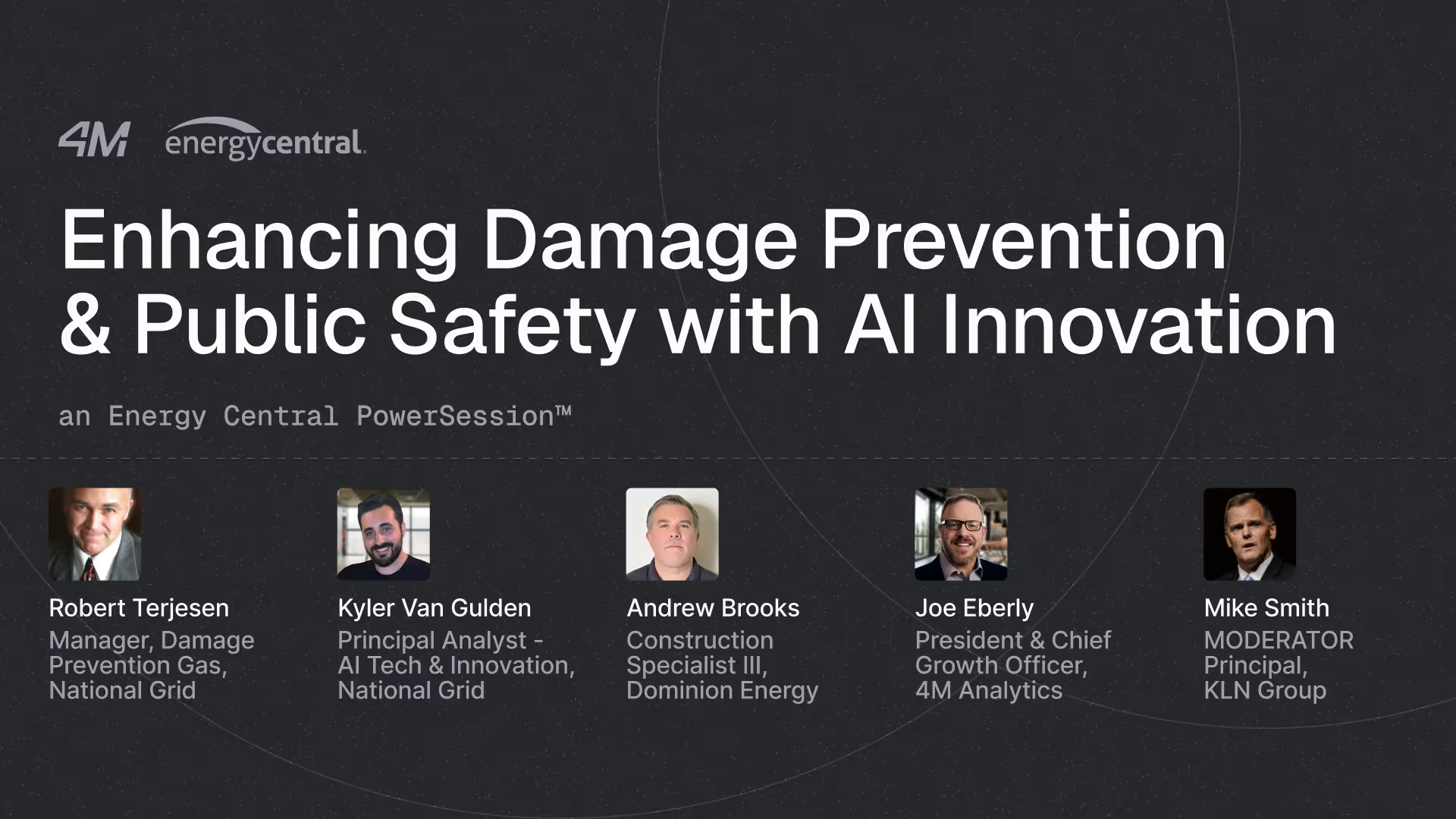
Table of contents
The numbers tell a sobering story: $61 billion lost annually to inefficiencies and failures in underground infrastructure work. Nearly half of Americans are planning to dig without calling 811. And an explosion of new construction—fiber buildouts, EV infrastructure, renewable energy projects, grid hardening—are all happening in rights-of-way already crowded with aging utilities.
Against this backdrop, a recent Energy Central webinar brought together damage prevention leaders from Dominion Energy, National Grid, and 4M Analytics to discuss how AI-driven utility mapping is transforming the way infrastructure stakeholders work together. The conversation revealed not just technological innovation, but a fundamental shift in how utilities, regulators, and contractors can align around shared, reliable data.
The Core Challenge: Fragmented Data, Siloed Teams
Joe Eberly, President and Chief Growth Officer at 4M Analytics, framed the industry's challenges succinctly. After working with utilities across the country, he identified five consistent pain points—and incomplete or outdated underground utility records top the list.
"Even some of the most mature organizations still struggle with legacy data, with legacy mapping and data silos that have existed out there in the industry, not just in the past five years, but in the past 30 and 40 years and beyond," Eberly said.
The problem compounds when you consider that every project touches multiple sectors. Utilities know their own data—though many have undocumented assets—but they lack visibility into what's around their assets. Add increasing excavation activity driven by fiber deployment, water line replacements, and grid modernization, and the risk multiplies.
Robert Terjesen, Damage Prevention Manager at National Grid and Vice President on the Board of Directors for New York 811, offered a stark case study. New York City, the largest municipality in the country, is unable to respond to locate requests for its water and sewer infrastructure. The reason? The city has acknowledged it simply cannot map all its assets because of their age: many water and sewer pipelines were installed in the 1960s, but New York City has even older and more complex infrastructure than most American cities. The requirements to map all pipelines with conventional methods are completely unfeasible, and some of the data sources are so old that they’re not conveniently available to anyone.
"Our gas crews, third-party excavators, and anyone doing work in the City of New York have, for the past decades, figured out workarounds," Terjesen explained. "They have to read the street themselves. They have to find workarounds, to spend the time and the money, to do test-holing and pot-holing, to just hand dig and verify where they believe the water and sewer and steam lines are."
This isn't just a New York problem. Andrew Brooks, Damage Prevention Manager for Dominion Energy in Virginia, pointed to a different data gap: 25 years ago, Virginia law exempted single-home dwelling service lines for telecom and electric from mapping requirements. That made sense at the time, but decades later, it means there is a significant blindspot all over the state.
"We have to pick up from where we might have left off then and use some of these tools to gain back some of that data," Brooks said. “We have competent locators in our state. But being able to get them started in the right location is so important to this process.”
From Manual Processes to AI-Driven Intelligence
The panelists described dramatically different workflows before and after implementing AI-driven approaches.
At Dominion Energy, Brooks recalled an era of excruciatingly manual, resource-draining interventions. Without predictive analytics, his team relied on work type classifications and labor-intensive site visits to identify high-risk excavations. Meeting industry goals like the Common Ground Alliance's "50 in 5" initiative—reducing damages by 50 percent in five years—felt daunting.
Now, Dominion uses an electric outage analysis tool that ingests 811 tickets and scores them against multiple factors: weather, excavator history, census data, proximity to lines. High and medium-risk tickets mean sending emails to excavators with safety resources and links to enforcement information. Field agents can pull up individual tickets for targeted interventions.
"Before, I felt like we were in the dark ages," Brooks said. "Now we can have a more pointed approach to go out there and say, we know this ticket could potentially have an issue. Let's have an intervention. Let's talk to that excavator."
National Grid's transformation has been equally significant. Terjesen described how design ticket requests used to consume hours of work across locating vendors and engineering teams, requiring field visits that delayed construction schedules.
With AI-driven mapping, that's changed. "Now that we’ve implemented 4M’s solution, we have immediate visibility into subsurface utility corridors without sending a single person to the field," Terjesen said. "The conflicts are flagged algorithmically. Design reviews that would typically take days and weeks now only take hours. And it can all be done from a desktop."
The shift from field-intensive to desktop-based workflows represents more than efficiency gains—it frees skilled workers for higher-value tasks while reducing the uncertainty that delays projects.
Building Confidence Through Collaboration
One question surfaced repeatedly throughout the discussion: how do you trust AI-generated data?
Eberly addressed it directly, reframing accuracy as a collaborative journey rather than a destination. "4M is not here to solve accuracy for everybody and the entire market. What we're here is to present a level of data and then collectively we work together to improve the accuracy of that data."
The approach involves aggregating what Eberly called a "constellation of data"—public records, aerial imagery, GIS information, permitting documents, and even historical locate marks captured through machine learning. When multiple data sources conflict, the AI weighs evidence to determine the most likely truth, revealing that reasoning for human review.
This collaborative model extends beyond technology to the people involved. Kyler Van Gulden, Principal Analyst for AI Technology and Innovation at National Grid, described how the buy-in challenge has evolved. Initial concerns about AI replacing workers have given way to something unexpected: union employees now suggest AI innovations themselves.
"A lot of the ideas that are actually coming to us, especially around AI-related innovation, they don't come from me," Van Gulden said. "Half the time they're taking that complaint, that anger, that frustration at an antiquated process and voicing those concerns. And now that we have some mechanisms in place to capture that feedback and then really explore the art of the possible—it's led to a tremendous amount of opportunity."
The lesson applies across the infrastructure ecosystem. When stakeholders share data and collaborate on solutions, and workers have the means to voice their feedback, the technology becomes a tool for alignment rather than disruption.
The Business Case: Cost, Time, and Regulatory Support
For utilities operating under affordability pressures, the business case matters as much as the technology.
Terjesen described how National Grid's initial engagement with 4M focused squarely on cost reduction. Design tickets represented a significant expense—locating vendors, engineering hours, field verification. The AI platform offered immediate cost avoidance by handling those requests digitally.
But something else happened once the technology was in the door. "As we sat in the room with our engineers and our operations teams and 4M, that's when we started to realize, where else could this be valuable?" Terjesen said. "Now we're also seeing the greater impact that 4M's digital solution can provide everywhere else that the damage prevention team wasn't even thinking about initially."
Van Gulden outlined National Grid's framework for prioritizing AI investments: type one savings deliver hard dollar-for-dollar reductions, while type two savings capture labor efficiency and avoid truck rolls. Both matter, but type one savings open doors with leadership.
Regulators, too, are paying attention. Brooks described using utility analytics to support legislative changes in Virginia, demonstrating to stakeholders exactly where process improvements could reduce damages. "Once the regulator heard that we could show them exactly where those touch points are and how we can reduce these damages, they were on our side," he said.
Terjesen added that regulators increasingly expect utilities to find efficiencies through technology rather than simply adding headcount. "Historically, if I want to reduce damages, if I need to get more folks out in the field, that means I probably need to add more field resources. That comes at an extreme cost. I think the regulators now look in this space to say, rather than continuing down that road, why don't you look for the tools that will help your existing workforce be more effective and more efficient?"
Looking Ahead
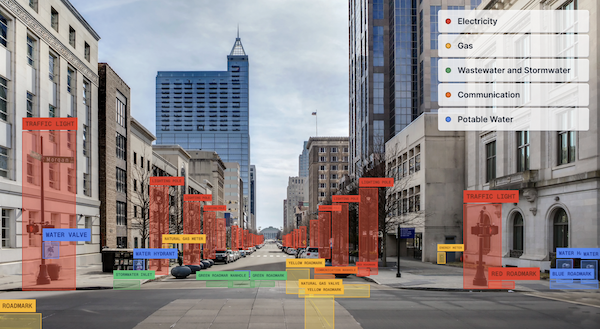
The webinar concluded with a live demonstration of 4M's platform, showing how users can access utility data instantly across proactively mapped regions—drawing a polygon and receiving water, sewer, communications, natural gas, and power lines within moments, enriched with surface features detected through machine learning.
But the technology demonstration underscored a larger point that ran throughout the discussion. The infrastructure industry's challenges—fragmented data, siloed teams, increasing excavation risk—won't be solved by any single platform or tool. They require stakeholders to work together, sharing data and building confidence in shared sources of truth.
As Eberly put it, accuracy is a partnership. The future of infrastructure isn't siloed—it's better together.

Recent blog posts

.png)

.svg)
.png)

Our Newsletter
Join 7k infrastructure professionals
Get monthly insights on ways to build smarter, faster and safer with Utility AI.