Ed Shappell on Maximizing ROI From Data and Technology Across the Project Lifecycle
Written by

Chris Garafola
Published on
.svg)
March 9, 2026
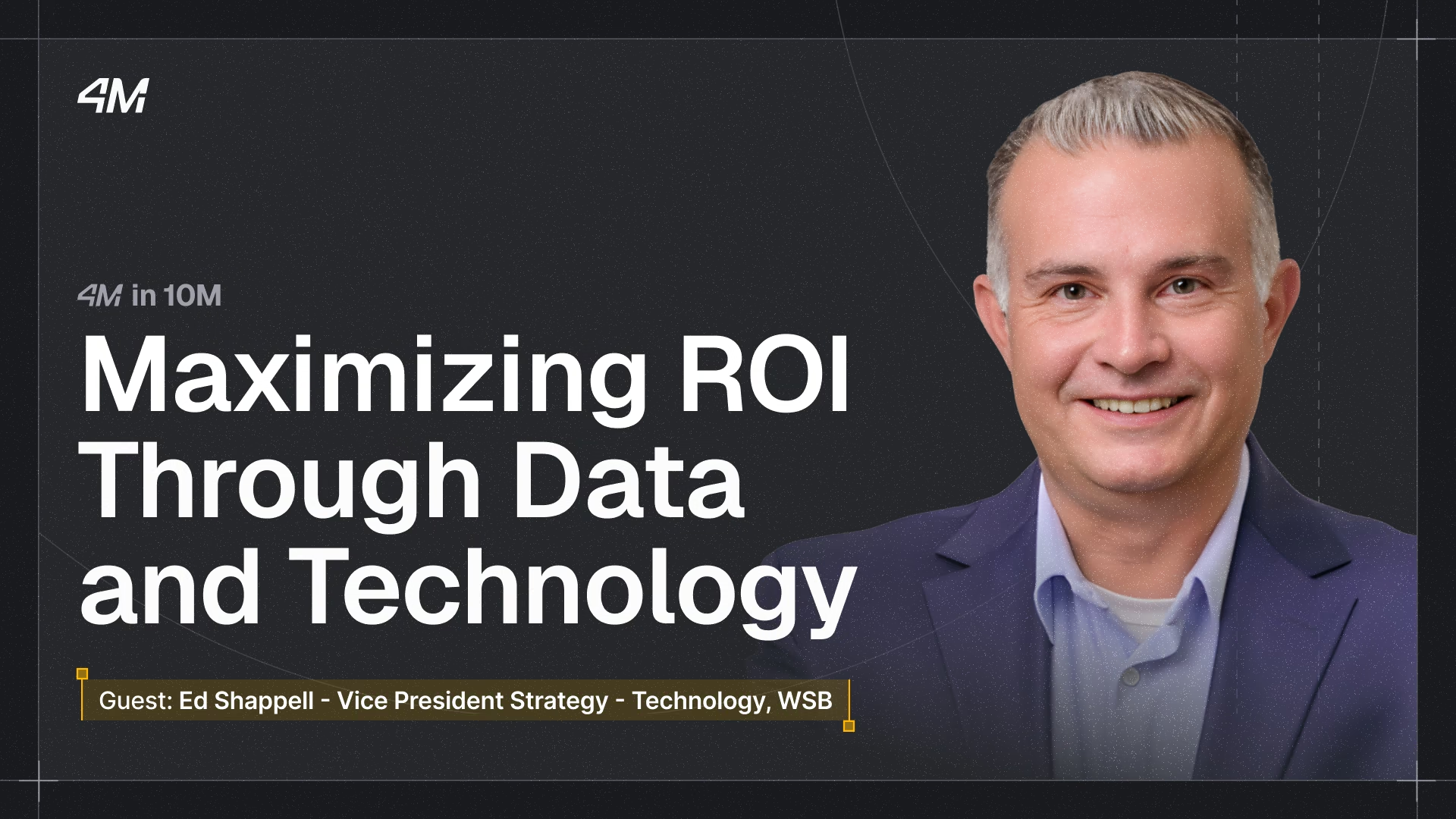
Table of contents
Utility relocations are among the most persistent pain points in infrastructure delivery — and, most of the time, the root cause is the same: a lack of data. Without reliable information, teams spend weeks on manual research, risk costly delays, and face safety concerns that can derail a project before construction even begins.
In this episode of 4M in 10M, host Chris Garafola sits down with Ed Shappell, Vice President of Strategy and Technology at WSB, to talk about how his team is using AI-powered utility data to cut through those challenges — not just in one phase of a project, but across the entire lifecycle. From alternative delivery projects with MnDOT to BIM-integrated risk reduction in Texas, Ed breaks down what real ROI looks like when everyone on a project can access instant, reliable utility data to help plan, design, build, and maintain infrastructure.
How is WSB solving the biggest utility relocation challenges?
Despite all the advances in the industry over the last 10 years, utility moves remain one of the toughest challenges facing WSB’s clients.
Shappell spent a decade working with civil contractors who were dealing with utility relocations, and they’re the first to tell you how challenging those moves can be. “A lot of it is just due to lack of data. It's hard to plan and then actually execute any kind of utility move without good information.”
This was one of the two key factors that led to bringing 4M into WSB’s digital delivery. They’re very intentional about using technology as a force multiplier, they offer unique services to civil contractors on infrastructure projects, and they saw firsthand the results 4M could deliver on a project with the Minnesota DOT.
One of MnDOT’s first alternative delivery projects involved utility moves, and with 4M’s data, WSB was able to save them several months of time on that move. With Minnesota’s very short construction season, the impact was even greater.
“I've seen the benefits with multiple DOTs, and multiple municipal projects where having good data on the utilities ahead of time before you do your utility moves,” Shappell says. “It really does make a big difference. It could cut a lot of time and cost off your project schedule.”
How to calculate the real ROI on a technology investment
Shappell is very intentional when thinking about whether a platform becomes part of WSB’s standard workflow. “One of the things we do at WSB is we look at measuring the improvement of any tool that we're going to invest in. And it's got to have a cost and time impact if it's really going to make sense as an investment.”
Some of the things that they measure to calculate the real ROI of a platform like 4M are:
- Can they get through utility research earlier in any kind of project delivery scenario?
- Can they build an early conceptual design using good utility data faster, and get it in the hands of the owners and contractors sooner?
- Does it make utility research, which is a frustrating process, easier for its users?
- Does it reduce project time and costs enough to make sense as an investment?
- Does it improve safety and reduce risks in the field?
He also factors in how much the platform improves WSB’s own business, as well as its clients', and with 4M, they’re able to deliver faster with better deliverables. They’ve seen improvements in faster project deliveries on multiple projects so far.
Where is WSB seeing the biggest impact from 4M’s utility data platform?
For Shappell, the answer is clear: “Where I see the most value today is alternative delivery projects, because you can get in sooner. You get better collaboration between owners, designers, contractors, earlier in the process and earlier in pre-construction. And that just reduces risks. You're able to accelerate having good data ready as you're progressing through your design.”
He’s talked to a lot of owners about this as well — having reliable data available pre-construction makes a big difference in how they’ll plan and execute the project.
“Your decisions are only as good as the information behind them. So if you can have better data earlier on, the better decisions you can make.”
Shappell is also anticipating a positive impact for owners, including DOTs and municipalities, and energy companies, from 4M’s platform throughout the project lifecycle and beyond. The impact of better utility coordination and mapping will help owners maintain and manage their assets in the long term.
What’s coming next for BIM utility data?
BIM (building information modeling) is going to expand at the DOT level, and Shappell suspects we’ll see more BIM design in the municipal and energy spaces as part of a natural progression. But this transition also comes with some bumps as the industry increasingly adopts BIM.
“One of the challenges, if you talk to a lot of DOTs around BIM, is that they need tangible benefits. They're looking for how BIM is going to really help me with costs, and my schedule. And we have some great examples. For instance, in Texas, we have concrete examples of good savings and metrics on using 4M data as part of that BIM process in early risk reduction.”
WSB has already seen significant value in leveraging 4M data directly in a BIM environment and modeling it there, leading to greater risk reduction, particularly in clash detection. Shappell sees a greater shift to BIM as the industry improves at measuring the savings from the technology and data, and then at communicating those savings to owners so they understand the value as well. But that part will likely take two to three years — the transformation isn’t going to be instant.
The 10-second takeaway:
Better data doesn't just build better projects — it builds better communities.
If Shappell were explaining his job to his nieces and nephews, he’d say: “What I do is I use technology and data to help build the world around them. Our goal is to make the community a better place for them to live in. And that includes safer roads, safer bridges, lower costs.” He’s demonstrating the value of data in helping everyone build better together.
Watch the full episode to get the deep dive on how Shappell is using AI to build faster, smarter, safer infrastructure, and what experience has taught him that technology never will about getting out in the field once in a while.

Recent blog posts

.png)

.svg)

.png)

Our Newsletter
Join 7k infrastructure professionals
Get monthly insights on ways to build smarter, faster and safer with Utility AI.