Gonzalez Delivers Winning Planning Level Study and Tightens the $130M Project’s Contingency Range by 10% with 4M
Written by

Chris Garafola
Published on
.svg)
December 18, 2025
Table of contents
Background
Gonzalez Companies is a leading civil engineering and construction management firm across the Midwest. With 25 years of experience navigating complex urban corridors, Dan Martin, Senior Project Manager and Southeast Water Engineering Director at Gonzalez, has built his career on delivering buried infrastructure design for sustainable infrastructure projects.
When a major Midwestern water utility issued an RFP for a multi-million dollar, 10-mile water system extension through a congested urban corridor, Gonzalez knew the stakes were high—and the competition would be fierce.
Key Results
- Reduced contingency range by $16 million. By tightening cost estimate confidence from +50%/-25% to +40%/-20%, Gonzalez freed up $16 million in capital that the client could confidently commit to other projects.
- Saved 35 hours of labor and $4,500 in fees. 4M's validated data reduced the relevant corridor length by 5,000 linear feet, minimizing the required area for 811 utility record requests and optimizing field investigation and office analysis.
- Realigned 4 miles of corridor before design began. Early detection of significant utility congestion enabled Gonzalez to proactively reroute the alignment, avoiding costly change orders and project delays.
Straight from the Source
Hear what Dan Martin, Senior Project Manager and Southeast Water Engineering Director at Gonzalez, had to say about his team's experience with 4M's Utility Data Platform.
Challenge: A Congested Corridor
For the transmission main project, the Gonzalez team faced a familiar challenge: planning a $130 million water system extension through a dense urban environment with incomplete utility data. And all on a tight budget.
“The task was to identify a viable corridor, flag major barriers, and provide a reliable cost estimate,” Martin notes. “We knew we were entering a cost-competitive proposal process, so we had to keep our price sharp.” But those tight cost estimates are difficult in an environment without instant access to reliable utility data.
"Where you have the data, you start with GIS," Martin explains. "The problem is, you generally only have the data your client will share with you and the data that's publicly available. This leaves a concerning knowledge gap from privately-owned utilities."
To fill that gap, engineering firms rely on 811 utility record requests—a legally required process that comes with its own set of challenges, especially when owners are slow to respond or unresponsive.
"Sometimes their response is in the form of paint marks, which requires field time," Martin says. "When records are provided, they may be of poor quality or difficult to georeference. It all adds up to time and effort that works against managing a competitive budget for our clients."
Lacking reliable utility intelligence, Gonzalez faced two unpalatable options: make conservative (read: expensive) cost assumptions to account for uncertainty, or risk underestimating the complexity and delivering a flawed plan to the client. Neither option builds the trust and confidence that keeps clients coming back.
"Without good data, the options are difficult to evaluate, and our confidence would be reduced," Martin notes.
Solution: Focus, Confidence, and Capital Efficiency with 4M
The Gonzalez team integrated 4M's Utility Data Platform at two critical stages: during the proposal process to impress the client with their innovative capabilities, and during the planning study to refine their analysis and cost estimates.
During the proposal phase, Gonzalez engaged 4M to reveal utilities for a portion of the project corridor. "4M found paint marks in one area that revealed client utility locations that were more accurate than existing GIS," Martin says. "The client took an interest"—and Gonzalez won the contract.
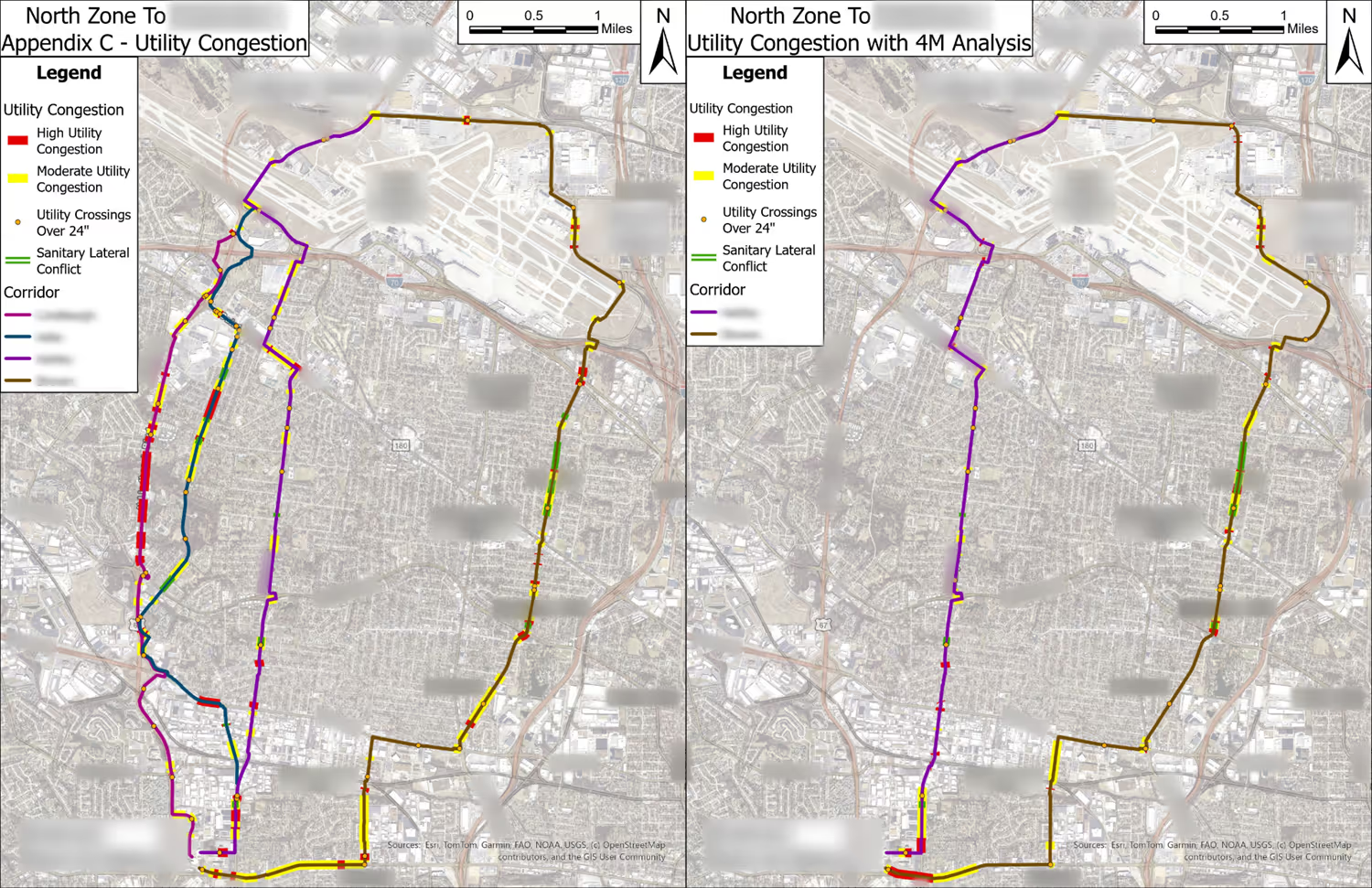
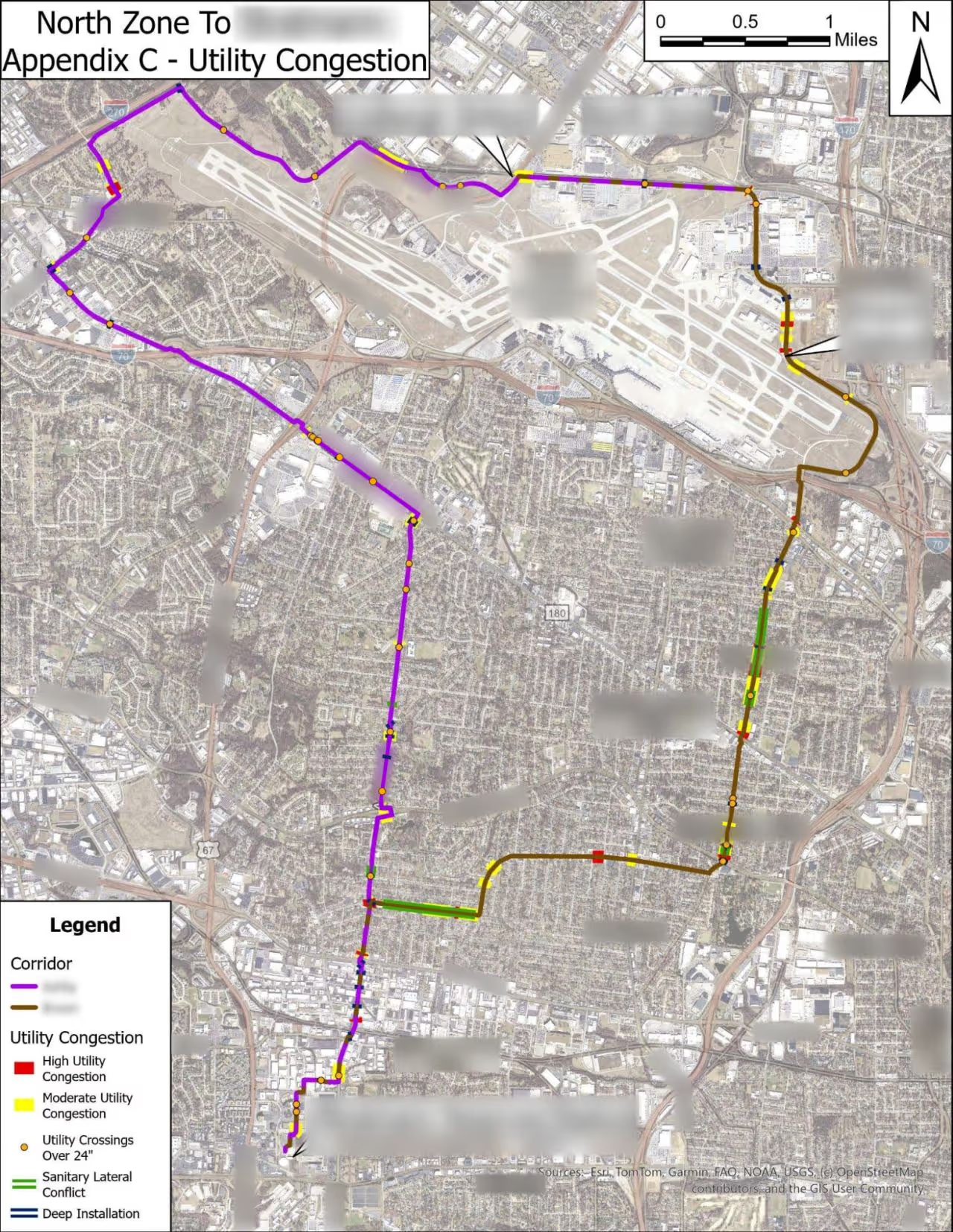
Once the project began, the team used 4M's validated data product to systematically reduce uncertainty across the 10-mile corridor. In their initial report, working solely with water and sewer GIS data, they identified 30,000 linear feet of corridor as having medium to high congestion and planned to request 811 utility records for 15,000 linear feet.
After engaging 4M, the picture sharpened dramatically. The congested corridor length was reduced to 20,000 linear feet, minimizing the relevant area for 811 utility record requests by one-third and saving 5,000 linear feet of analysis.
"That 5,000 LF reduction of 811 utility record requests saved us about 35 hours of labor and $4,500 of fee," Martin explains. "Also, our focus improved with a clearer understanding of the corridor. Our concentration zoomed into 10,000 LF of this ten-mile corridor."
But the real value of 4M wasn't just time savings—it was confidence. And confidence enables companies like Gonzalez to achieve more precise cost estimates and timelines.
From Class 5 to Class 4: Tightening the Contingency Range
"Confidence and focus translate to sharper cost estimating," Martin says. "Our initial report presented a class 5 estimate of $137 million with +50% / -25% bounds ranging from $206 million to $103 million. With 4M's data, we raised our estimate class to 4 and reassessed the project value to $136 million. At class 4, the bounds tighten to +40% / -20% which results in a range of $190 million to $109 million."
That $16 million reduction on the high end isn't a cost savings in the traditional sense, but it's capital the client doesn't have to reserve for potential overruns. In other words, it's $16 million that they can confidently commit to other critical infrastructure projects.
“That can become an opportunity for a client looking at: ‘down the road, where's my spend going to be? What risk am I taking on? And then I can use that additional revenue and focus that into other projects within my capital queue.’”
Avoiding the Costly Redesign
The more in-depth and reliable utility data from 4M also revealed significant congestion that was not initially apparent. "The additional utility intelligence caused us to realign 4 miles of our 10-mile corridor to avoid significant congestion not detected during our initial analysis," Martin says.
Catching these issues at the planning stage—rather than months into design or, worse, during construction—saved the client from a potentially damaging and expensive delay.
"If I don't make the best choice for my client as early as possible, and we get months or even a year down the road and find out that a direction was incorrect from the start, that's where you can backtrack months and years," Martin says. "And now all of a sudden inflationary costs, which are really involved in our industry right now, can start to pick on a project and can be hurtful."
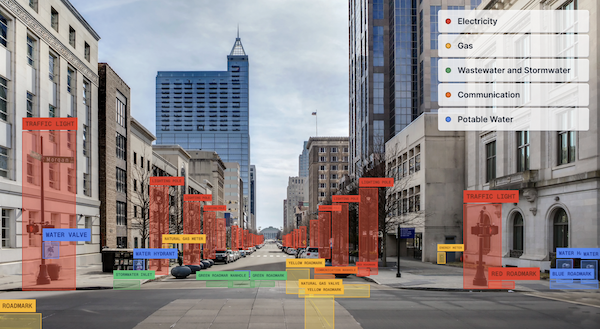
For example, features such as a historical, interactive Google Street View option have helped Martin and his team save significant time, which in turn saves money and rework. “One of my design checklist items is asking the drafter to look through Street View through time for road cuts and paint marks,” he says. “It can go back 10 or 20 years, and there may be eight-plus iterations in between. Going into that type of internet-available resource and combing through it would take me or a technician a bunch of time of going up the road, hunting down all those paint marks. That's one of the best parts about what 4M is now doing for us.”
Looking Forward
For Dan Martin and the Gonzalez team, the water system extension project demonstrated the strategic value of integrating AI-powered utility intelligence into the earliest stages of infrastructure planning.
"It seems like we're just getting started," Martin says. "Each new state added is an opportunity to expand the use of Foundation Data. New tools, including the identification of road marks, help us see more and create value for our clients."
But beyond the technology, Martin sees 4M as a trust-building tool—one that reinforces the client relationships Gonzalez has spent decades cultivating.
"In partnering with 4M, the most beneficial element is that with focus comes confidence, and that confidence translates forward in many ways," Martin explains. "On this project in particular, I was seeing a cost estimating focus and improvement, but in general, it translates to partnership with your client. And when they see confidence in what you're delivering to them, it helps deliver possibilities and delivers on the relationship for the future."
In an industry where trust is the differentiator, and mistakes can cost millions, 4M's instant, reliable utility data you can trust and verify gives firms like Gonzalez a competitive edge not only in winning work but in delivering it with confidence, precision, and care.
"Trust by far is the differentiator in the relationships that we build," Martin says, "and consistently delivering on that trust, that's how we stay busy and just really build joy out of what we do."

Recent blog posts

.png)

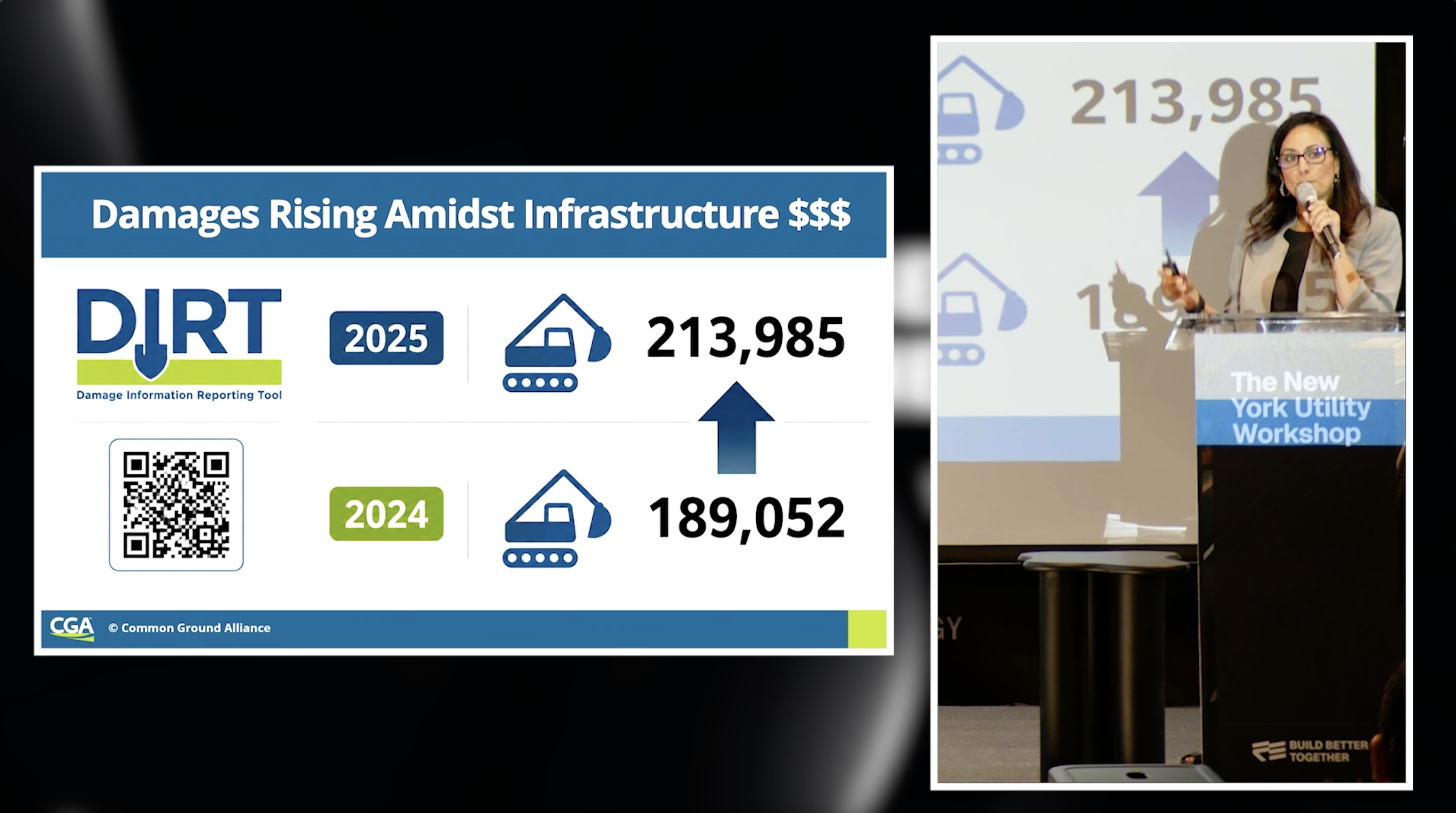
Utility Damages Are Rising — And the Fix is Simple, But Not Easy
Three years into a five-year industry pledge to cut utility damages in half, the 2025 DIRT Report shows they’re actually rising. We asked 150+ infrastructure leaders in New York why, and what the industry can do to get the numbers moving in the right direction.
Chris Garafola
.svg)
August 10, 2026
Our Newsletter
Join 7k infrastructure professionals
Get monthly insights on ways to build smarter, faster and safer with Utility AI.