AI in Construction: Solving Problems Before They Become Problems with Rod Fiske
Written by

Chris Garafola
Published on
.svg)
September 2, 2026
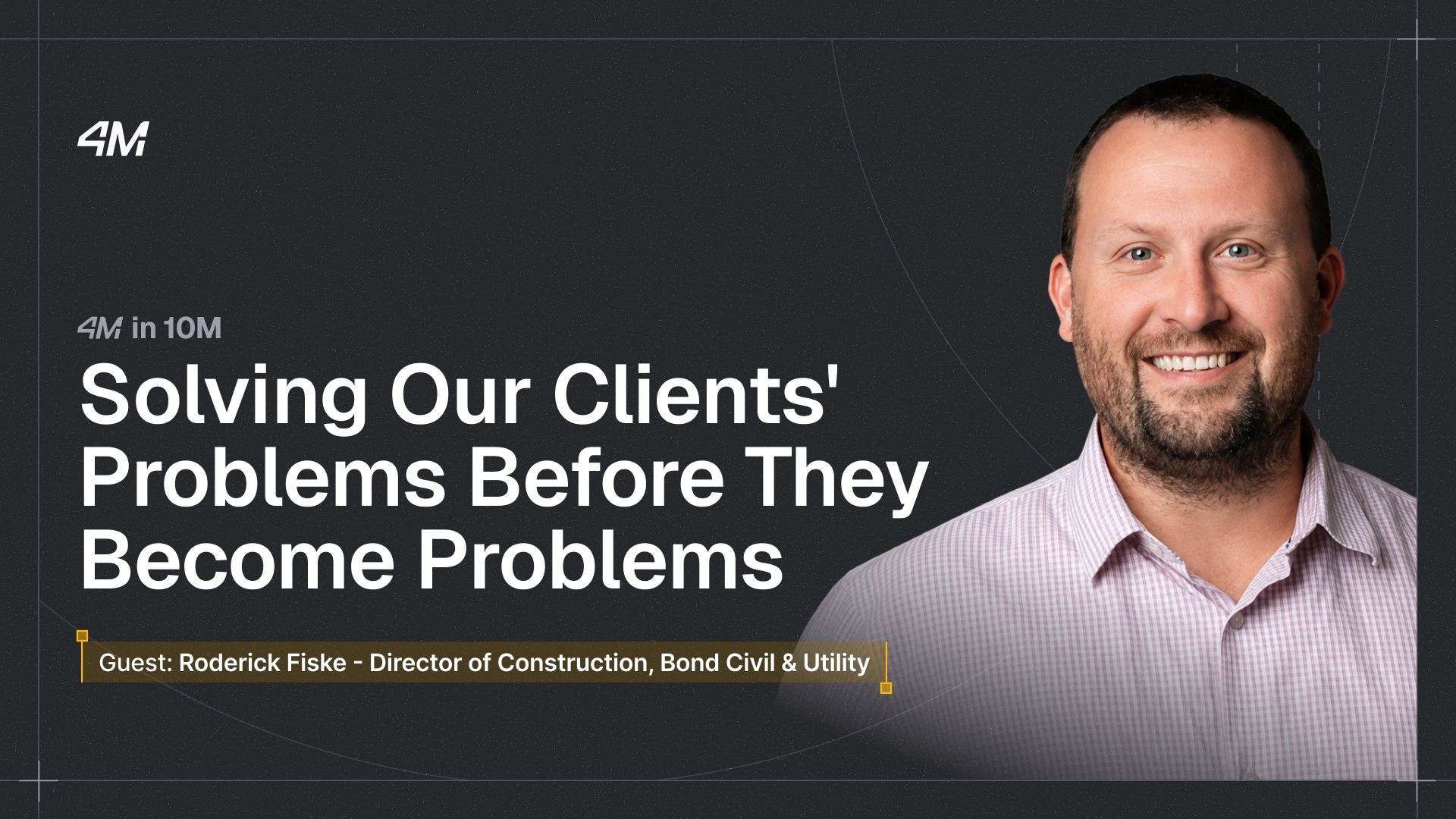
Table of contents
Guest: Roderick Fiske, Director of Construction, Bond Civil & Utility
"You've got to plan to be early just to be on time."
That's the jobsite wisdom Roderick Fiske carries around, and it describes how Bond Civil & Utility operates. As Director of Construction, Fiske runs the process side across Bond's four markets in the Northeast. His job, as he puts it, is to solve his clients' problems before they become problems, which is difficult when the as-builts you're handed aren't accurate, and the line that's supposed to be 36 inches comes out of the ground at 42.
On this episode of 4M in 10M, host Chris Garafola talks to Fiske — fresh off his insightful panel appearance at our New York Build Better Together roadshow — about AI in construction, design-build jobs that involve chasing sixteen utility owners for records, and the three questions a new tech platform has to survive before Bond will adopt it.
Fiske went into engineering very intentionally. “I have this basic understanding that in life, there’s things you produce and things you consume. And I wanted to be a net producer of things that are necessary for society.”
When he was a teenager, his dad sat him down with a fully prepared list of things he could be when he grew up and told him that, since he was now in high school, it was time to make some big life decisions. He explained that every year is more important than the last until your mid-twenties to early thirties because it sets the stage for the rest of your life.
Fiske highlighted energy and water as necessities of the world we live in, so he decided to become a construction engineer — initially in the energy space, and now in both the water and energy spaces.
Now he’s the Director of Construction at Bond Civil & Utility, a self-performing general contractor founded in 1907 and operating in the Northeast, including New York City, where their business has grown to more than $200 million. He covers the process side across Bond’s four markets: substations for transmission, LNG compressor stations for oil and gas, airports, and water/wastewater for civil, peak shavers for power generation.
Why speed matters in the construction project lifecycle
Bond’s initial trial with 4M has moved into a partnership that’s growing and strengthening. Fiske finds that the biggest value is the speed that the 4M utility data platform offers in the planning process.
They used to have to go out and do a physical survey of a project site: walking the route, scanning it, then correlating the data. That took days to weeks to complete. He notes the significant difference using 4M: “The 4M information is available, and you get an initial view within twenty seconds, and then you get more detailed information typically within a few hours. Sometimes it's even faster.” Crews still go to the field for verification, but now they know where the risk is concentrated. And the planning team can check the drawings that clients provide them before anyone mobilizes.
Enabling proactive problem-solving
“The construction industry is known for hard, long hours, and difficult situations,” Fiske says, “and you don’t have time to do a lot of the administrative items that are necessary to prepare you to be successful in future days, weeks, and months.” He hopes to see AI lift that admin burden so his team can do more operational planning and spot problems before they happen. “With AI, I’m looking forward to minimizing some of those fires I have to put out, some of the administrative burden of putting together proposals, and all those other miscellaneous activities that take up precious minutes — hopefully in the future, they’ll take seconds.”
Fiske notes a current project where they dug up a line that was supposed to be 36 inches but turned out to be 42 inches. That 6-inch difference means all their supportive excavation and shoring needs to change, resulting in a multi-week delay in the execution of the project. “If we were able to find that before we had to go and dig it up,” he notes, “we could have an alternate plan in place and there could be no impact to the job.”
Similar challenges pop up in projects where his team has to clear trees, because there are tight windows in the year when this is allowed. He mentioned a project in Queens going through Willow Lake Park, where they haven’t been able to locate the existing lines they’re supposed to be lining.
“If we were able to do that ahead of time using 4M software, it would be a huge time saver for the entire project because we have an October through March window to clear trees. But right now we don't know which trees to clear. So if we aren’t able to do it this year, everything just gets pushed a year.”
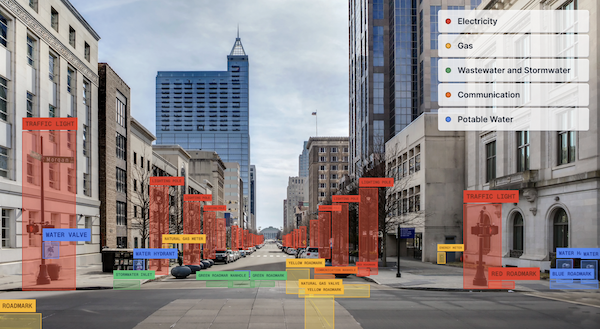
Those delays mean the project isn’t delivered to the community on time, and cost Bond time and money in the process, too. Historical imagery narrows the risk of delays by closing the gap between what was documented and what was actually built. An aerial image from twenty years ago that shows an excavation on the north side of the road rather than the south can give teams more confidence in planning their projects. With technology like 4M’s visual utility evidence, engineers can verify their utility data, confirm line locations, and assess above-ground conditions before they ever visit the site.
How to drive adoption of a utility data platform
When he tests a new technology (he gets about 15 emails a week from different services), he thinks through three things before he'll even take a closer look — let alone bring it on board. One, does it solve a problem? “Bond in general is a problem-solving company. We’re set up to solve our clients’ problems before they become problems.”
Two, does the cost make sense? Solving a problem at a cost that doesn’t have a strong ROI isn’t ideal. And three, is it easy to use? The barrier to adoption needs to be very low to achieve the adoption rates they need to see that ROI.
But once the tool is purchased, the real work is just beginning. Fiske suggests getting a few early adopters on board to gather strong case studies showing the product added value to their daily work, and then slowly scaling the rollout from there. That builds momentum internally before pushing it out to a wider audience. “So we start with the pilot, then move to a larger audience, and then give it a year or two. And then if you’re successful and able to prove the value, then you can implement it across the board.”
Where is Bond seeing the biggest impact from 4M right now?
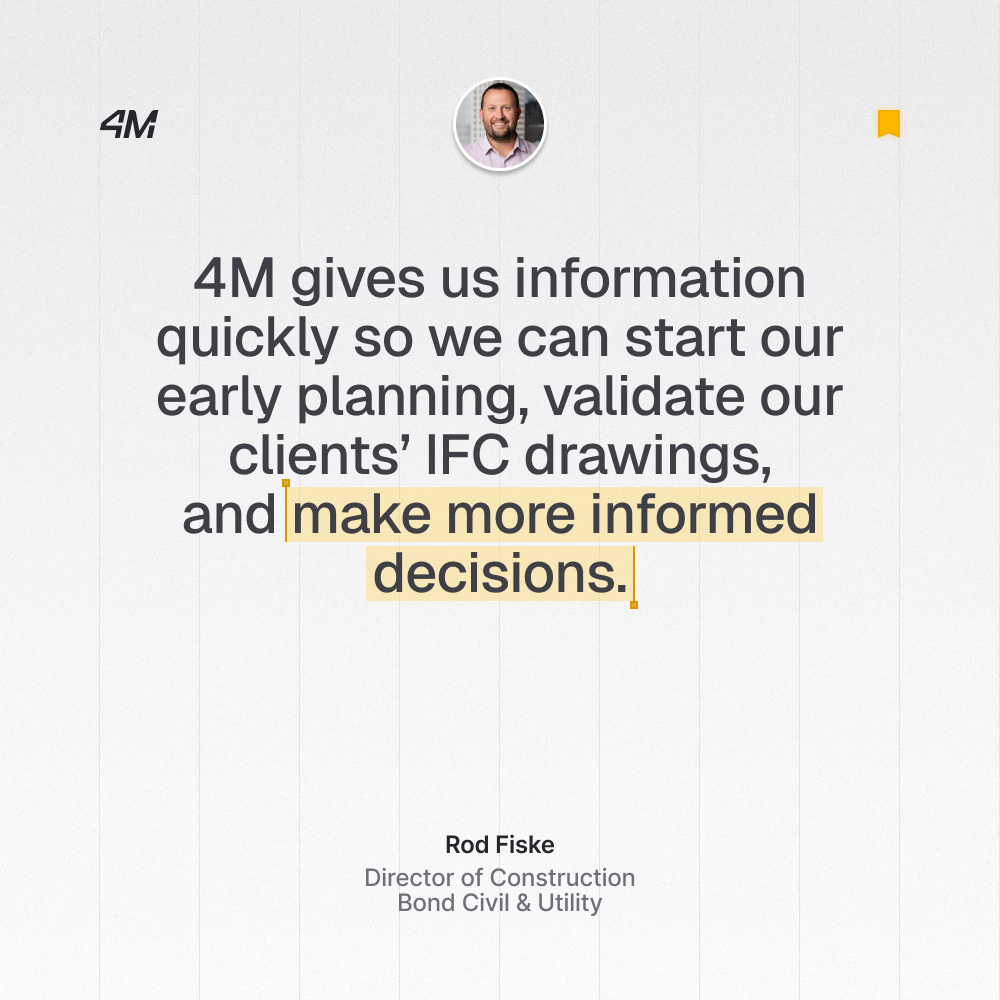
4M delivers reliable utility data much faster than traditional methods, which makes a significant difference in Fiske’s team's planning process. “We could get that information before,” he notes, “it just took us a lot more time to do it. It’s helping us get information ahead of time so we can start some of our early planning, like validating IFC drawings that our clients have given us or other information that we've provided as part of our bidding.”
And he predicts that design-build transmission work will be the single biggest impact in the utility business. It’s very difficult to get information on those types of projects right now. “4M accelerates the process of getting from a zero percent design to a thirty percent design because what 4M puts out on the transmission side, you already have like a 30% or 60% design or the information necessary to complete a 30% to 60% design.”
Fiske is optimistic about the potential of AI to help the skilled people in the industry to get the administrative tasks off their plates so they can dedicate more time to solving complex, critical problems. “It's given us significantly more information to make decisions on,” he says. “I think the utilization of AI is just gonna continue to make us stronger, and I think hopefully it'll end up freeing up more personal time for many of us, doing less administrative tasks. And then we'll be able to enjoy life more.”
What is the future of utility intelligence?
Fiske anticipates a future in which his clients will allow their information to be uploaded directly into the 4M system, creating a global utility database that shows everything. “At times, we have a design-build jobs we’re talking to sixteen or seventeen different utilities, trying to get information. And it’s inefficient for both the industry and for society.”
He’s also looking forward to the end of the year, when 4M expects to have all 50 states live on the platform. Right now, Bond operates in seven states, but they only use 4M in New York. And in areas where there’s little to no information available, Bond has to make pseudo as-builts for many projects because their clients don’t have them. The nationwide expansion will give them another opportunity to add even more value to their clients and help them keep their projects on track.
Watch the full episode of 4M in 10M to get all the details on how Fiske and Bond are using 4M today, what they’re planning for their future partnership, and Fiske’s car that got him voted worst vehicle in his high school two years running.
FAQs
Does 4M replace field investigation or SUE?

No. 4M makes SUE better targeted, not unnecessary. It shows where uncertainty and conflict risk actually live, so teams can focus QL-A/B investigation there instead of blanketing the corridor. Records show what's documented. 4M shows what's there. Crews verify it in the field.
Why do tree-clearing windows matter on infrastructure projects?
Many states allow tree clearing only during a specific window each year, and crews typically have to replant or pay restitution for what they remove. Teams that can't locate the lines beneath the trees can't tell which trees to clear. Miss the window, and the work waits until next year.
Rod Fiske, Director of Construction at Bond Civil & Utility, describes a project in Queens running through Willow Lake Park, where this is the live constraint: "We have an October through March window to clear trees. But right now we don't know which trees to clear. So if we aren't able to do it this year, everything just gets pushed a year."
How do construction firms decide whether to adopt new technology?
Rod Fiske, Director of Construction at Bond Civil and Utility, runs every pitch through three questions: does it solve a problem, does the cost make sense, and is it easy enough that people will actually use it. He says adoption barriers matter as much as capability — a platform that solves a problem but never gets used returns nothing.
Recent blog posts

.png)

.png)

Utility Damages Are Rising — And the Fix is Simple, But Not Easy
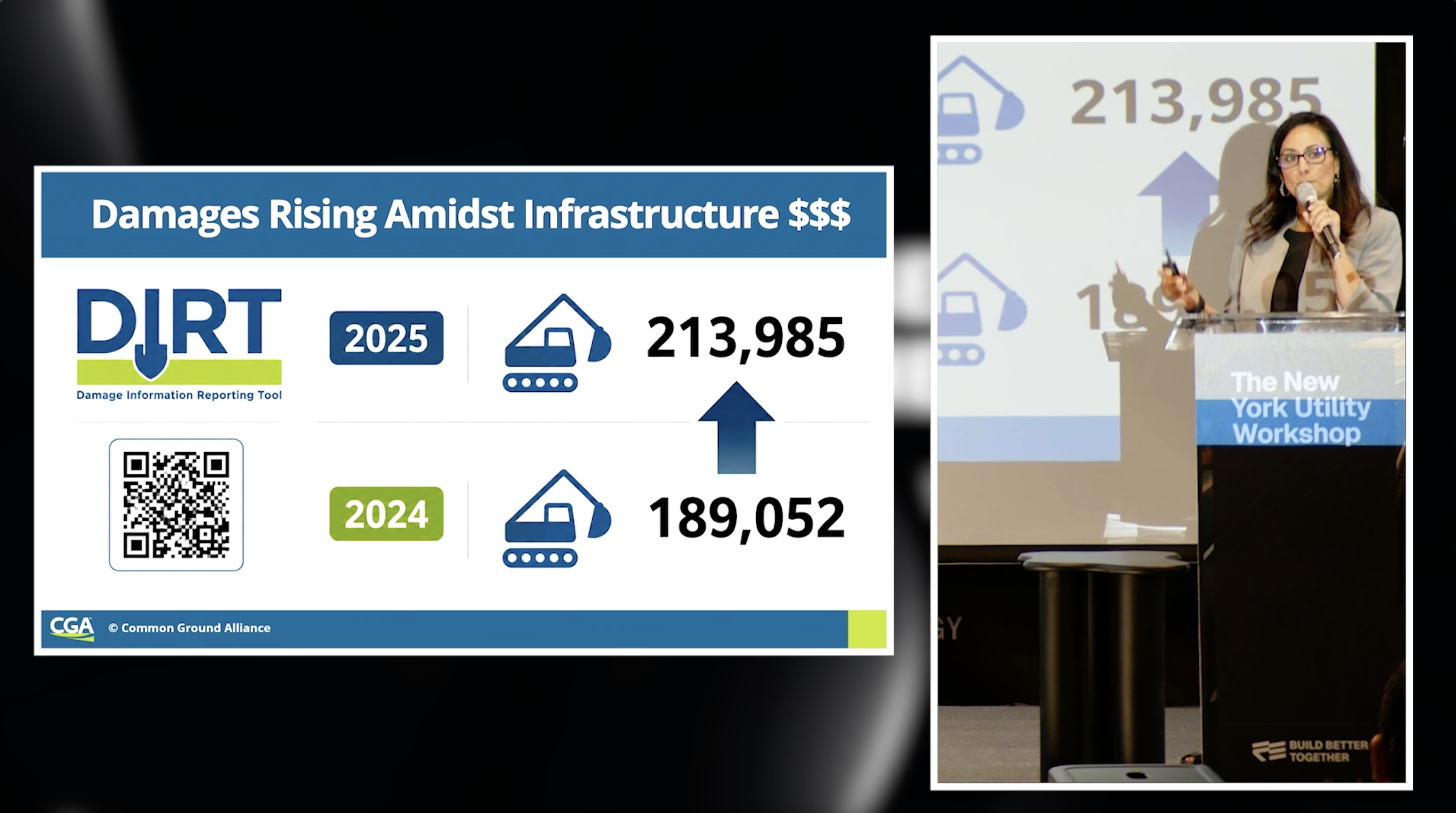
Three years into a five-year industry pledge to cut utility damages in half, the 2025 DIRT Report shows they’re actually rising. We asked 150+ infrastructure leaders in New York why, and what the industry can do to get the numbers moving in the right direction.
Chris Garafola
.svg)
August 10, 2026
Our Newsletter
Join 7k infrastructure professionals
Get monthly insights on ways to build smarter, faster and safer with Utility AI.