A Utility Strike Is Not an Accident
4M’s 8/11 Day position on how to better protect America’s underground infrastructure
Written by

Itzik Malka
Published on
.svg)
August 11, 2026
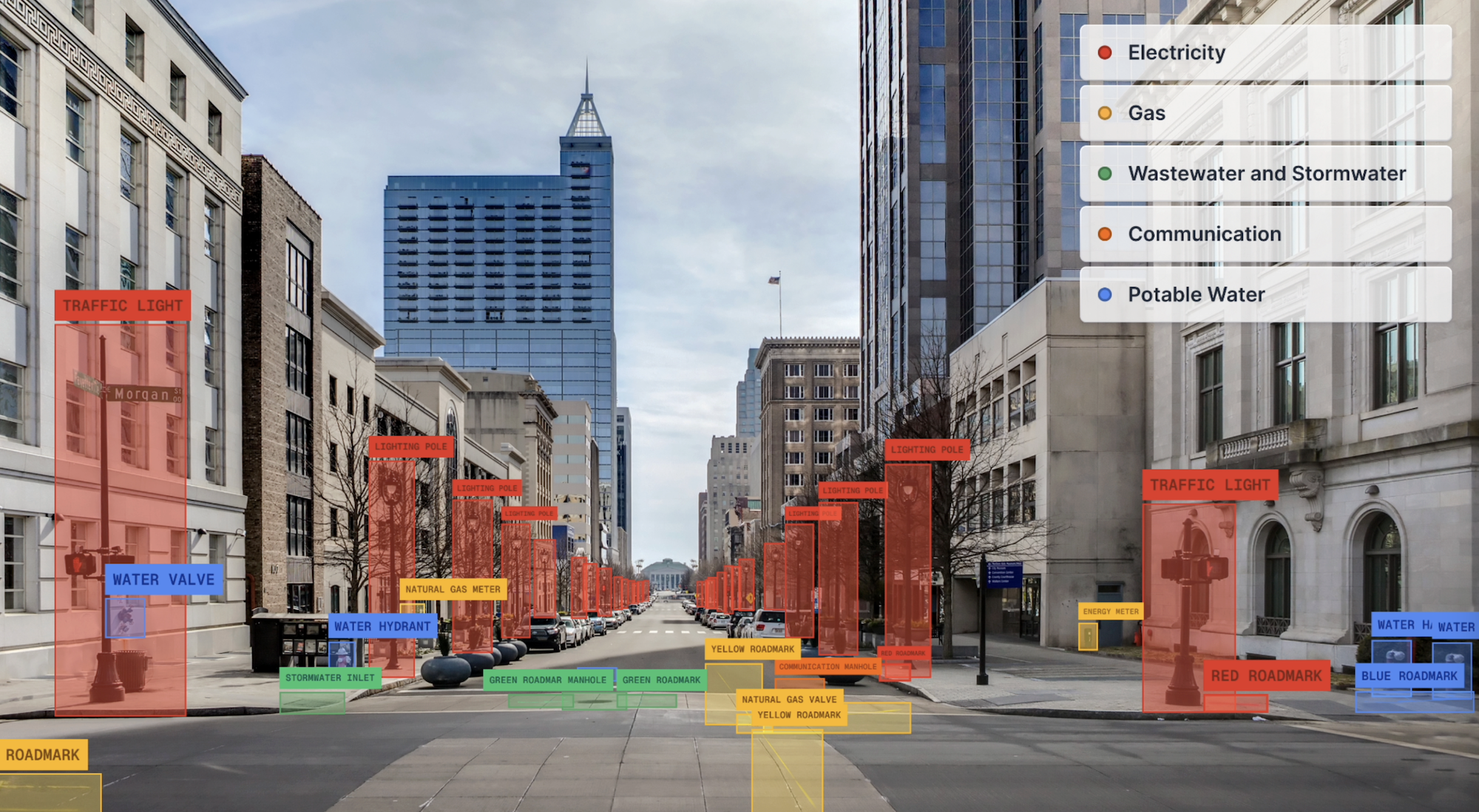

Table of contents
4M’s 8/11 Day position on how to better protect America’s underground infrastructure
8/11 is a day to remind all those that plan to dig to call 811, wait the required time, and excavate carefully around marked underground utility facilities. Yet the problem arises before 811 is even called.
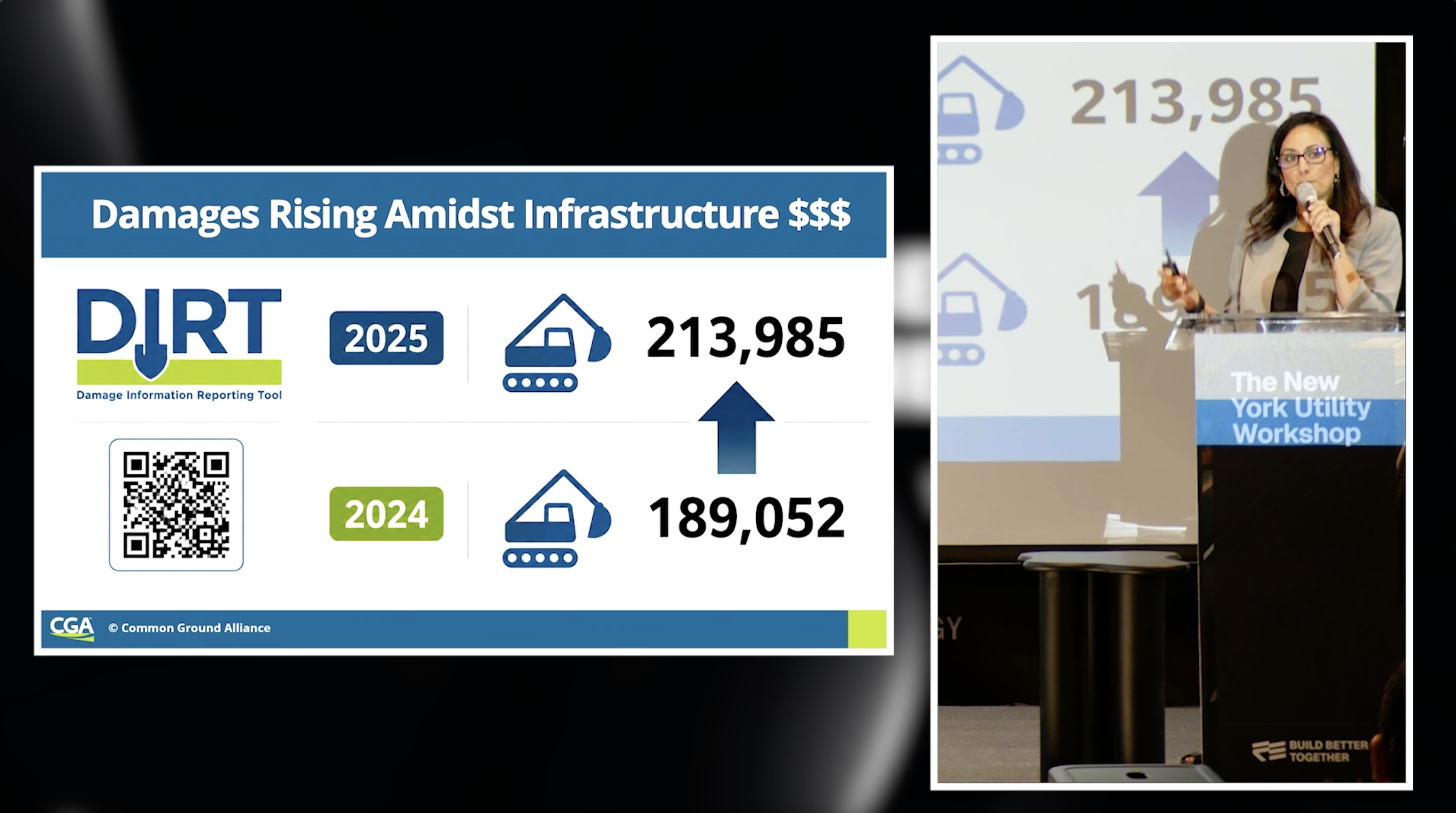
A utility strike is not an accident. It is almost always the predictable outcome of making critical decisions without accurate knowledge of what lies underground. After decades of relying primarily on compliance and enforcement through the One-Call process, the industry has struggled to produce the sustained improvement that all stakeholders have been working towards. In 2023, the Common Ground Alliance (CGA) launched the 50-in-5 challenge to reduce damages by 50% within 5 years, and the industry has made meaningful advances through education, standards, and collaboration. Yet, according to the CGA’s 2025 Dirt Report, there were 24,933 more unique damage incidents in the United States in 2025 than in 2024 (an increase of 13%). This pattern seriously impacts our capacity to build and maintain the utility infrastructure that keeps America running, and our ability to keep our citizens safe. A new approach is needed.
The scale of the challenge. The CGA documented 213,985 unique damages to buried utilities in the United States in 2025: almost one strike every two minutes. (It is safe to assume this number is an underestimate, as reporting damages to the CGA is voluntary.) In the past two years, strikes due to unmarked utility lines have led to the deaths of four Americans, including two children, numerous injuries, several house explosions, and many more damaged buildings. This is completely unacceptable and demands immediate action. The CGA is bold and unambiguous that the status quo cannot continue: “the time for incremental change has passed…invest in transformation or accept that utility damages will follow pace with construction activity.” True damage prevention begins the moment a project enters scope, not after a locate ticket is called in. But the tools to enable this broader strategy have been sorely missing for decades.
The problem is wider than damage prevention. Human casualties, property damages, and service disruptions are only the most catastrophic outcomes of poor utility records, but the same missing data plagues every phase of the infrastructure lifecycle. In a survey of DOTs by the National Cooperative Highway Research Program (NCHRP), utility issues were ranked as the most common risk factor for project outcomes, affecting 81% of new construction projects and 89% of reconstruction projects. New roadway and infrastructure routes are chosen without knowing what they cross. Bids carry contingencies that are no more than best guesses. Construction accounts for what was missed during design in the most expensive forms: delays and change orders. Maintenance cannot prioritize the aging assets it cannot locate. And the additional costs for all of these unknowns and errors are borne by citizens and ratepayers.
The failure is structural, not human. Locators are already working towards impossible targets: when a single ticket may be submitted covering more than 10,000 acres, with locates expected in 48 hours, the system reveals its breaking points. But every ticket, no matter what the size, may end in disaster if the records behind it aren’t accurate. As NULCA, The Voice of Professional Locators states, “When facility maps are outdated or incomplete, the gap between what's marked and what's in the ground isn't a technician failure. It's a records failure.” According to the CGA, damages due to unmarked or mismarked lines comprised the largest category of incidents with known root causes: 36,734 strikes, a rise of 3% from 2024 to 2025. In the same period, damages caused by failure to notify 811 dropped by 2%—awareness campaigns are working, but their progress is more than negated by the locator errors that existing records cannot prevent.
Today’s methods are not scalable. As NULCA says, “The 811 system was designed roughly fifty years ago for a world processing less than one million locate requests per year. It was made free to excavators to encourage adoption. That made sense in 1974.” In 2025, the CGA logged over 273 million transmissions from One-Call centers. We cannot accommodate exponential growth through unscalable methods. Not through more training or labor, when there’s already a labor shortage. Not through fines, legal fees, and lawsuits, which all divert utility budgets away from their true purpose: improving and expanding infrastructure. Not through more compliance and enforcement, which don’t address the records problem at the root. Other methods, however, are almost infinitely scalable: technology, data, and artificial intelligence. In 2020, the National Association of Regulatory Utility Commissioners (NARUC) stated, “AI can enable substantial improvements in underground mapping and safe excavation.” Six years later, the majority of Americans use AI several times a week in their personal and professional lives, yet it has barely scratched the surface on damage prevention and infrastructure planning.
No single organization exists to deliver the solution. Engineering and locating firms sell one-time, localized deliverables. Utility owners face prohibitive costs to map their existing networks, some of which were never recorded, and lack accuracy or completeness benchmarks to assess their current records. One-Call centers are designed to manage ticket data, not utility data. Municipalities and DOTs lack the budget or the mandate to maintain comprehensive, reliable GIS data sets for facilities they don’t own. Every party acts sensibly within its own remit, and the unified and complete map of all underground facilities falls through the gaps between them. Even the scope of that project remains unknown: the Alliance for Innovation and Infrastructure estimates that there are 50 million miles of buried infrastructure in the US, much of it unmapped or inconsistently recorded. That gap is exactly what 4M is working to close.
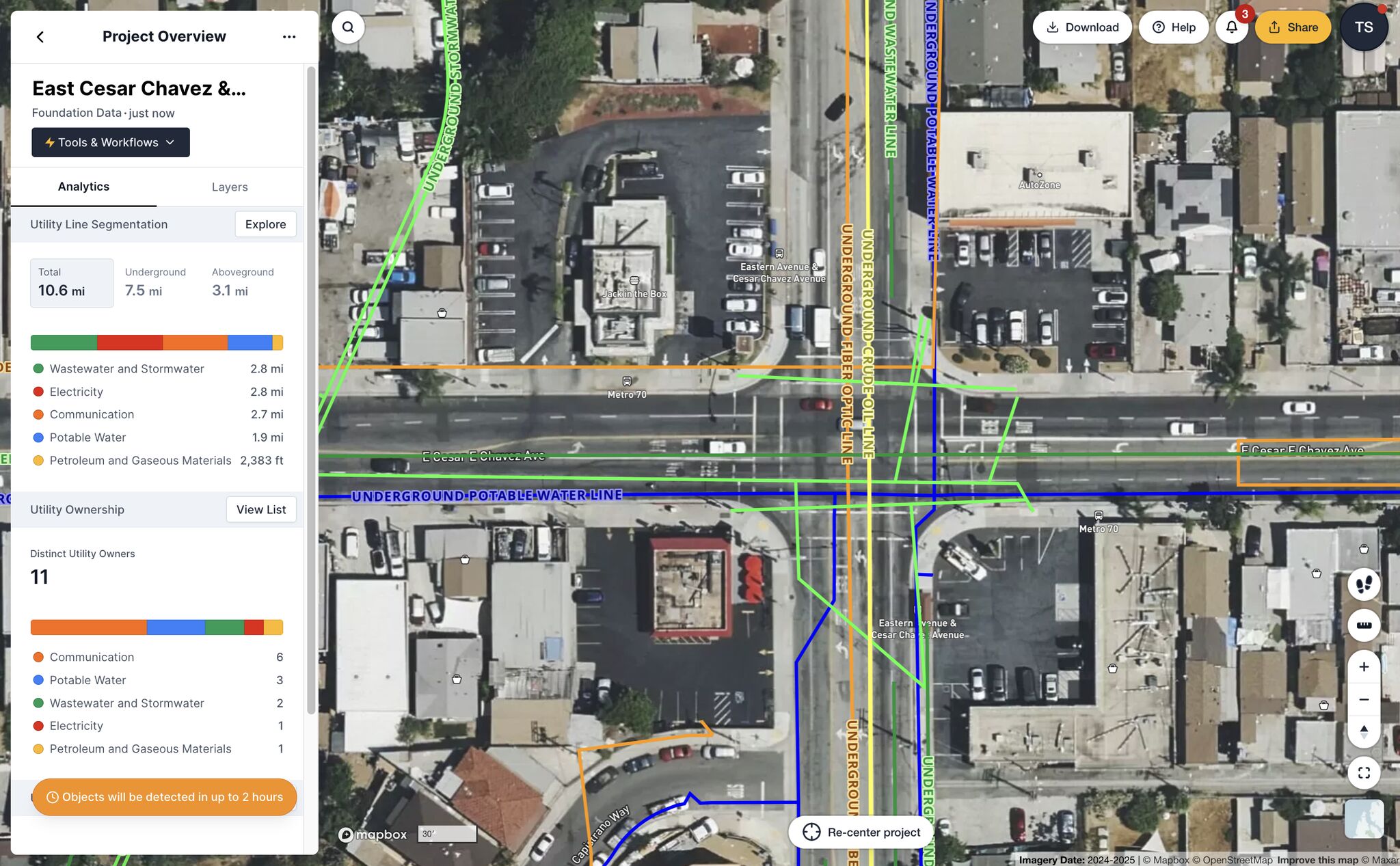
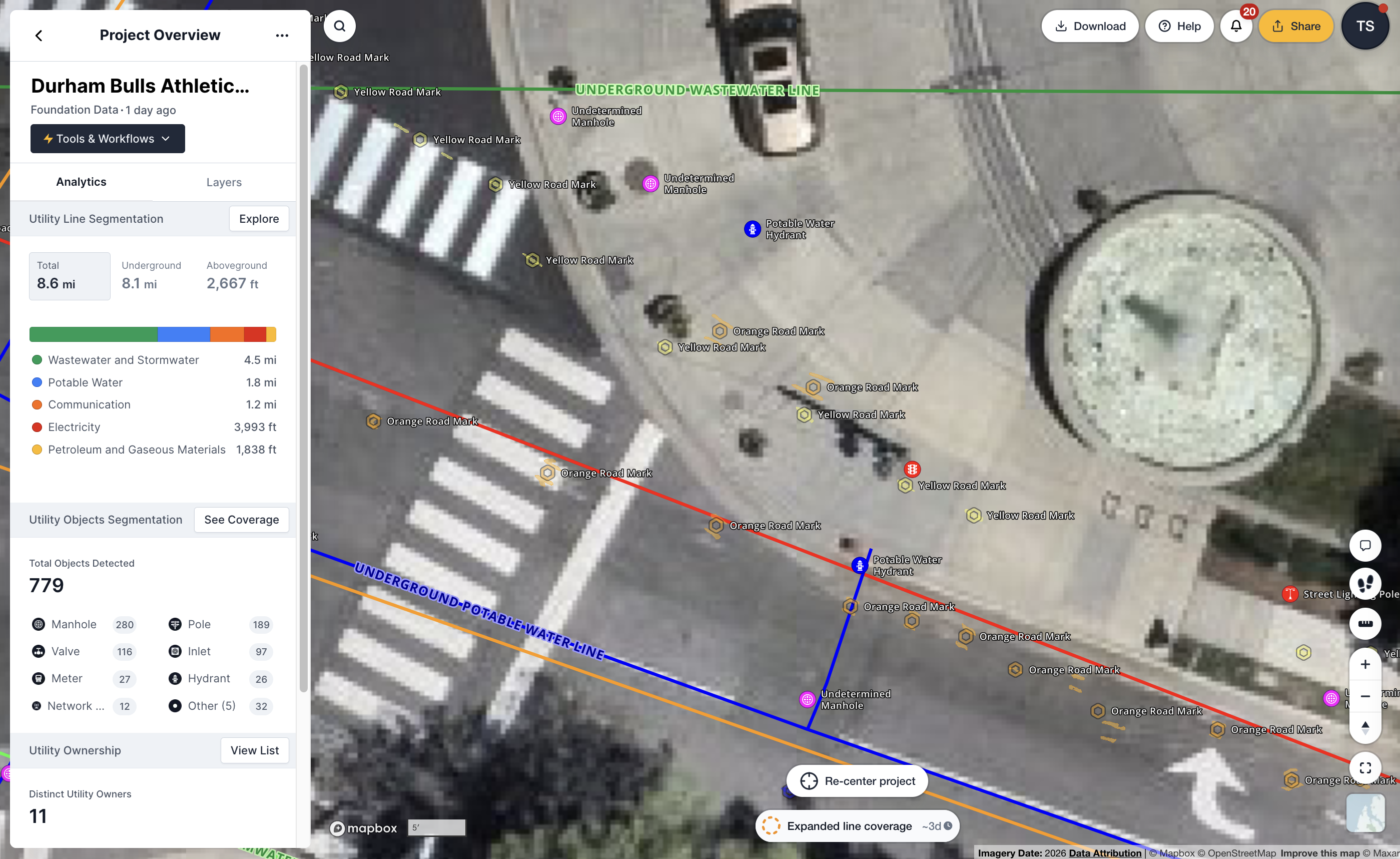
4M is building America's Subsurface Model. A live map of infrastructure above and beneath the ground, across the entire US, with AI-powered visual reasoning to solve record gaps and errors. As our data collection and conflation processes accelerate, we’re on track to map all 50 states by the end of 2026. Our deterministic AI generates lines for utilities that were never documented and corrects record errors that were never fixed, using visual facility evidence and indicators of underground utilities from street and aerial imagery, road marks, network topology, and engineering logic. Utility data streams into the CAD and GIS platforms that teams already use, and organizations can build their own AI workflows on top of reliable, comprehensive, and up-to-date data to build, operate and maintain their systems with evidence-backed confidence.
What changes with the right technology. Utility risk becomes a modeled, quantified factor in planning and design, rather than a perpetual threat to budgets and schedules. Early conflict identification sparks creative design solutions, rather than jobsite emergencies. Scarce locating resources, tools, and expertise are prioritized where they produce maximum safety and value, rather than spread thin across an unfeasible number of daily tickets. And the subsurface model stays current: locates, surveys, as-builts, permits, damage investigations, drone videos, and images are no longer isolated events, but inputs into a constantly updating model of all infrastructure on every project. The feedback loop is complete, from planning to construction close-out, throughout operations and maintenance, improving data quality and reducing risk for future projects on the same site.
Our message to the industry: join us. Change starts with visionary utility owners, is implemented by engineers, supported by One-Call centers, and depends on the government’s understanding of the gravity of the situation. There will always be dig tickets. But calling in a ticket alone does not solve the utility data problem. With a living utility intelligence platform providing up-to-date, reliable, and comprehensive data to owners, engineers, and locators, they can truly support the contractors and excavators constructing 21st-century America, as well as protect its citizens from harm. On this 8/11 Day, let’s commit to building better together: not only safer excavations, but smarter infrastructure.
Read the accompanying press release.

Itzik Malka
Navigating the depths beneath our feet is more than just a mission for Itzik Malka; it's a relentless passion that has led him to co-found 4M Analytics, a groundbreaking Infrastructure & Utility Mapping Tech-Company. With an entrepreneurial spirit coursing through his veins, Itzik envisions a world where the hidden infrastructures below us are not mysteries, but accessible maps that drive humanity’s progress. His pioneering drive seeks to replace blind trenching with a digital repository, revolutionizing the way we navigate underground infrastructure. By harnessing a variety of cutting edge technologies, Itzik's team is rewriting the rules, offering real-time, cost-effective data that solves one of the greatest challenges civil engineers experience today.
Recent blog posts

.png)
Utility Damages Are Rising — And the Fix is Simple, But Not Easy
Three years into a five-year industry pledge to cut utility damages in half, the 2025 DIRT Report shows they’re actually rising. We asked 150+ infrastructure leaders in New York why, and what the industry can do to get the numbers moving in the right direction.

Chris Garafola
.svg)
August 10, 2026

Here's What's New in 4M: July 2026
July brought two updates that give teams more visibility and more ground to work with: a new Admin Dashboard for tracking usage and adoption at a glance, and Foundation Data live in Massachusetts, another step on 4M's path to nationwide coverage by the end of the year. Here's what's new.

Nicole Heger
July 31, 2026
Our Newsletter
Join 7k infrastructure professionals
Get monthly insights on ways to build smarter, faster and safer with Utility AI.