Trust But Verify: A Veteran Engineer’s Take on AI in Infrastructure
Written by

Chris Garafola
Published on
.svg)
September 21, 2026
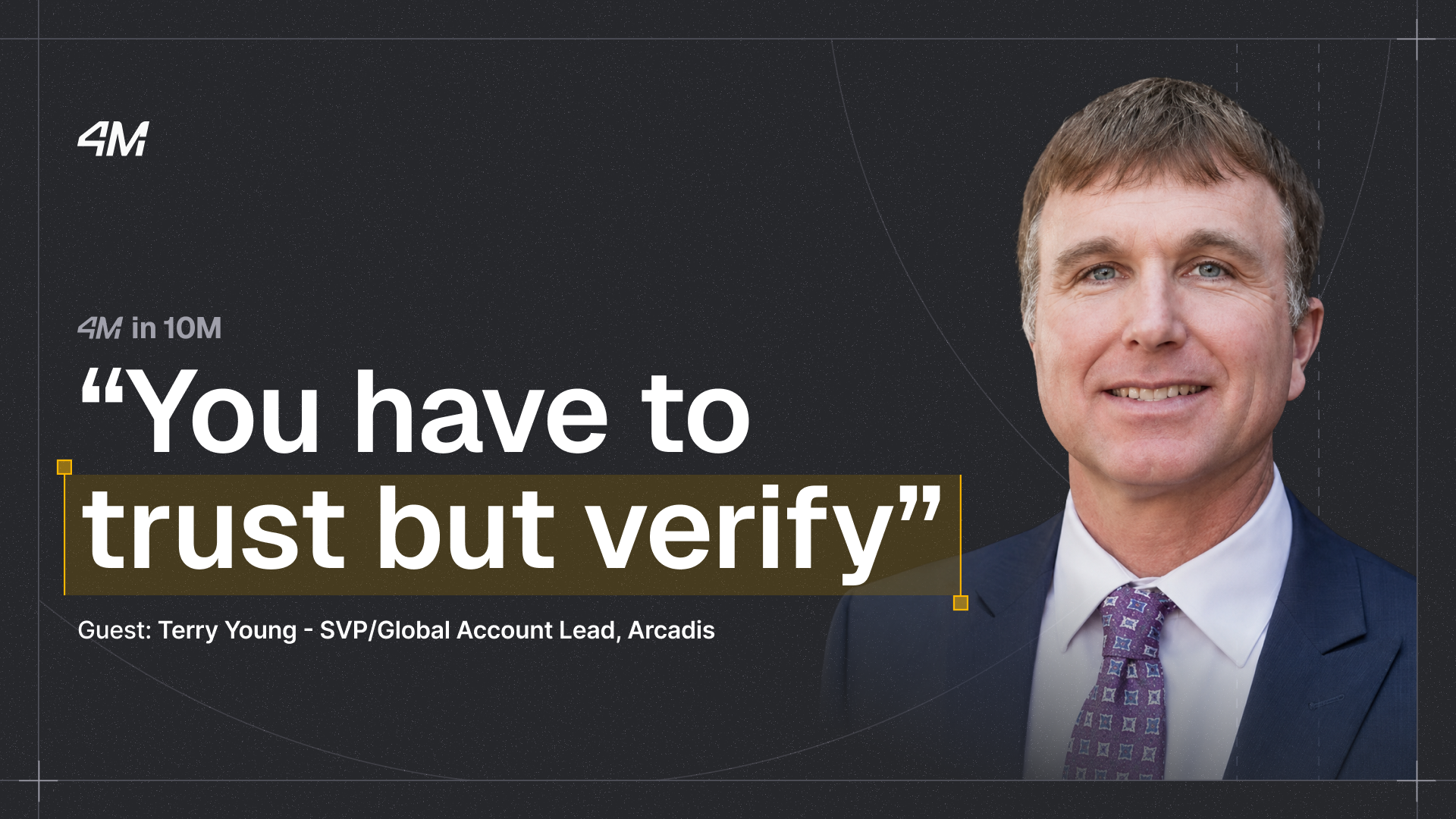
Table of contents
Terry Young has spent almost 36 years figuring out what’s in the ground before crews break ground. So when he says AI belongs in that work, he’s speaking from experience. His rule with AI: trust it, but always verify what it tells you. At Arcadis, where he leads global accounts, that’s the stance he brings to every conversation about adopting new technology.
He recently joined Chris Garafola, host of 4M in 10M, to discuss how he sees the future of AI in the infrastructure industry, what stood out to him about the panel he was just on about driving innovation, and how AI, combined with expert human judgment, can lead to better decision-making for everyone.
Comfort has a cost
Young is the senior vice president and global account lead at Arcadis. He’s a professional engineer too — he loves variety and staying busy, he says, and infrastructure is at the front of his mind. What made him passionate about it as a profession was how critical it is, and how easy it is to take for granted in our lives when it’s working well. It’s only when something goes wrong, like the water stops running, that most people think about it.
Young was recently a panelist, and Arcadis was a co-sponsor, at the New York Build Better Together workshop, where industry leaders explored how better alignment among people, data, and technology can drive smarter infrastructure outcomes. He also saw a live-action constructibility walkthrough where 4M's data flowed into Trimble Connect and into SiteVision's Augmented Reality. He found the energy in the room was really positive and the dialogue very open — what he calls a “think tank atmosphere” with a highly engaged audience.
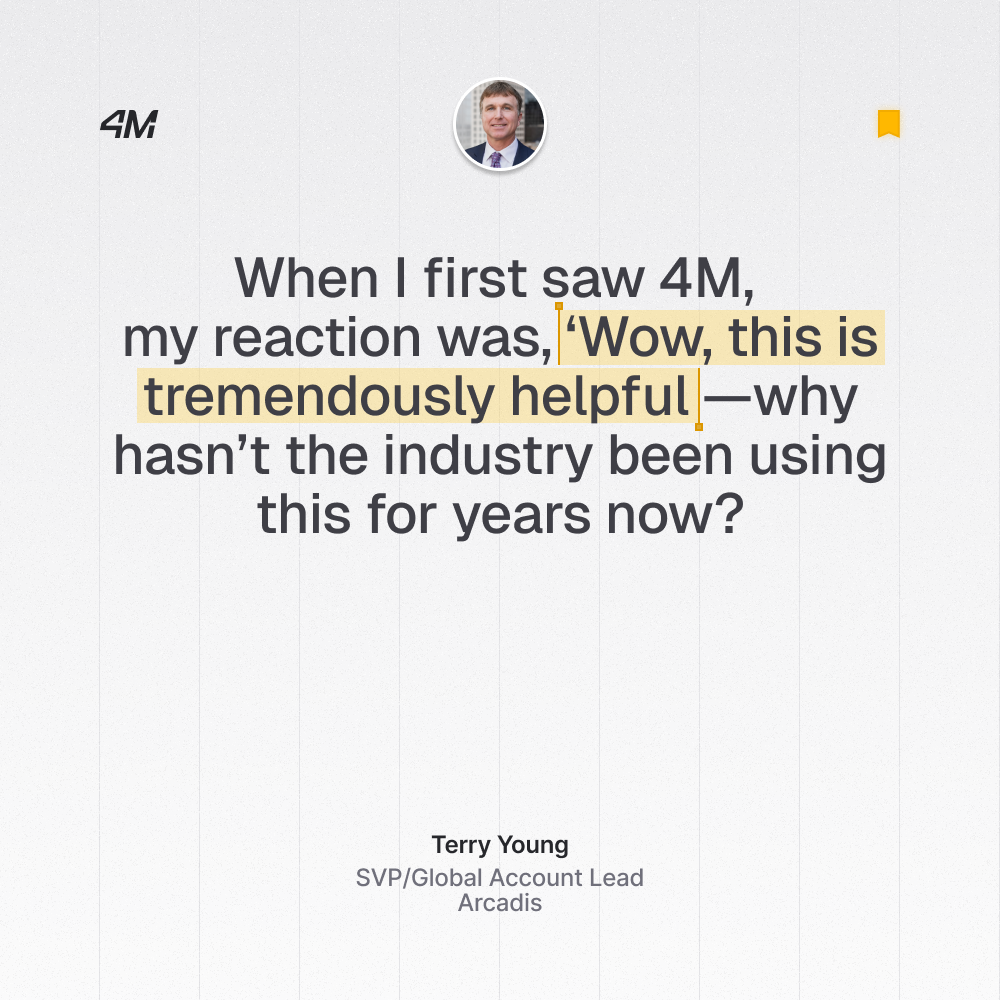
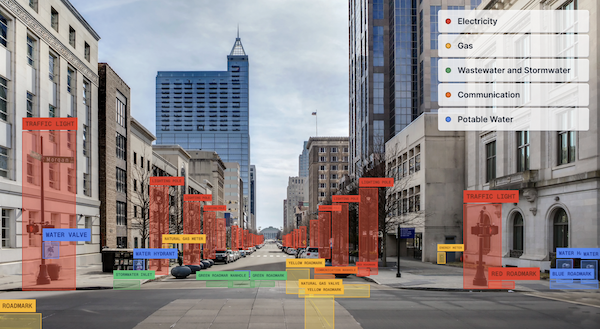
Evolving traditional workflows with innovative solutions that harness AI, like 4M’s platform that delivers instant, reliable utility intelligence, in this new way seems obvious once you see it, he says. But it’s hard to imagine it until you see it with your own eyes, especially in an industry that's been around as long as infrastructure has.
“People are very comfortable with what they know. For all of us in the industry, the current process is what we’ve come up with,” Young notes. But comfort isn’t the same as confidence. He doesn’t think all the traditional methods need to be discarded just to keep up, or kept out of inertia, either. The best way forward is to give teams instant, reliable utility intelligence they can trust, validate, and access across teams, technologies, and workflows.
What one data layer for every project would unlock
Arcadis is a big company — they operate not just across the US but globally. The ability to communicate and share utility information digitally from one source of truth would be tremendously powerful, in Young’s words.
“Some of these infrastructure projects are getting really large, and some of them go across state lines. They're huge infrastructure projects, and they need a common platform that brings the information together and allows you to use it. A platform like this does exactly that.”
Going out to a site with physical drawings in hand and hoping they’re accurate is the status quo. It doesn’t have to be. Young was impressed at the workshop to see the 811 operators endorsing the idea of a living, breathing utility data platform, since they know better than anyone how outdated the current process is.
“I still see folks going out and marking utilities, and they're flipping through various drawings,” he says. “We all know those drawings are only as good as the information given to them. It likely doesn't have the major break that required them to move that line two years ago. It's probably not a drawing they've got.”
Young sees this kind of platform as valuable not just to engineering firms and their clients, but also to the utilities themselves. It’s fundamental to how all the stakeholders on a project work better together.
Enabling teams to focus on high-impact work
“It's so critical to understand where existing infrastructure is and have that knowledge up front,” Young says. “And the earlier you have it, the more it helps with the planning of your project. We get into trouble when we get to the field, we have a contractor, and then you find something that you didn't know was there. That's when the big dollars are spent.”
The clients he works with at Arcadis have a lot going on, both resource-wise and financially. The more his team could help them plan ahead with a clear picture of utilities above and below their site, the more confidence they would have in the scope, cost, and schedule they've committed to.
Even if they only discover a few small deviations in the records for an individual project, the cascading impact of delays, design changes, and ordering new materials adds up. The accumulation of those deviations over time, across all the projects the client has going on, can significantly affect their business.
Where verification actually happens: in the field
Watching the live demonstration of 4M and Trimble’s SiteConnect, which lets you visualize and validate utility data together at the workshop, Young called it “tremendously impactful and helpful for what I do.” In particular, he noted the ability to talk directly to the folks in the field as they verify the data in the platform. They can go exactly where there’s still uncertainty — like the corners of a vault — and shoot the corners so everyone knows exactly where it is, live on the screen. That’s the most effective way he sees teams trusting but verifying what’s in the platform, which complements but doesn’t replace human expertise and judgment.
Where AI in infrastructure is headed
There’s a lot of infrastructure in the US that’s outlived its useful life. But it’s not feasible for Young’s clients to go out there and replace it all right away — many of the utilities they work with are already stretched financially and working hard to keep up with shifting demands.
He’s anticipating that they’ll use AI more and more to prioritize projects intelligently: to run models and different scenarios to help them make informed decisions about the best value and the most critical thing to replace right now, and then budget for it. Then they can create a path forward for a maintenance and system modification program.
And once that maintenance is done, it’s not stagnant — it’s easy to update the platform so it’s always current. “The AI has the ability to actually help them shape good, informed business decisions to not only manage the infrastructure and its reliability, but the cash flow, the resources, and the elements that need to support it. You can bring it all together.”
Young sees an exciting time ahead for the infrastructure industry, and he urges his colleagues not to be afraid of AI but to learn how to use it as a tool. That means understanding what it can and can’t do for you, and verifying the data it gives you. “This is a great running start and a much better foundation to do that than what we currently have.”
Thanks to Young for joining us and for sharing his perspective on how the industry can adopt AI responsibly.
FAQs
How is AI actually being used in infrastructure work today?

AI can help teams identify utilities in a project area before crews mobilize, so they can plan around actual conditions rather than outdated records. Terry Young, Senior Vice President and Global Account Lead at Arcadis, explains why timing matters: "We get into trouble when we get to the field, we have a contractor, and then you find something that you didn't know was there. That's when the big dollars are spent." Young also sees AI expanding into asset management and capital planning—running models and scenarios that help utilities prioritize which aging infrastructure to replace, when, and with what budget.
Why does a national utility data platform matter on multi-state infrastructure projects?
Large programs increasingly cross state lines, which means teams are stitching together records from different agencies, owners, and formats. Terry Young, Senior Vice President and Global Account Lead at Arcadis, a global engineering firm, says a unified platform that brings all utility information together is fundamental to how those programs actually get delivered — it lets every stakeholder work from the same picture instead of piecing together fragments.
How do you know AI-generated utility data can be trusted?
You verify it. In 4M, utility lines are pinned to their evidence — records, imagery, and on-surface indicators — and verified by geospatial experts, so teams can see the sources behind what they're looking at. Terry Young, Senior Vice President and Global Account Lead at Arcadis, calls the approach "trust but verify." Crews confirm locations in the field exactly where uncertainty is highest.
What's the biggest misconception about AI in infrastructure?
That it's meant to replace the people doing the work. Terry Young, Senior Vice President and Global Account Lead at Arcadis, describes it as a tool: the professionals using it need to understand what it can and can't do, verify the outputs, and apply their judgment. Used that way, it's a much stronger foundation for planning, coordination, and decision-making than the manual processes it replaces.
Recent blog posts

.png)

Utility Damages Are Rising — And the Fix is Simple, But Not Easy
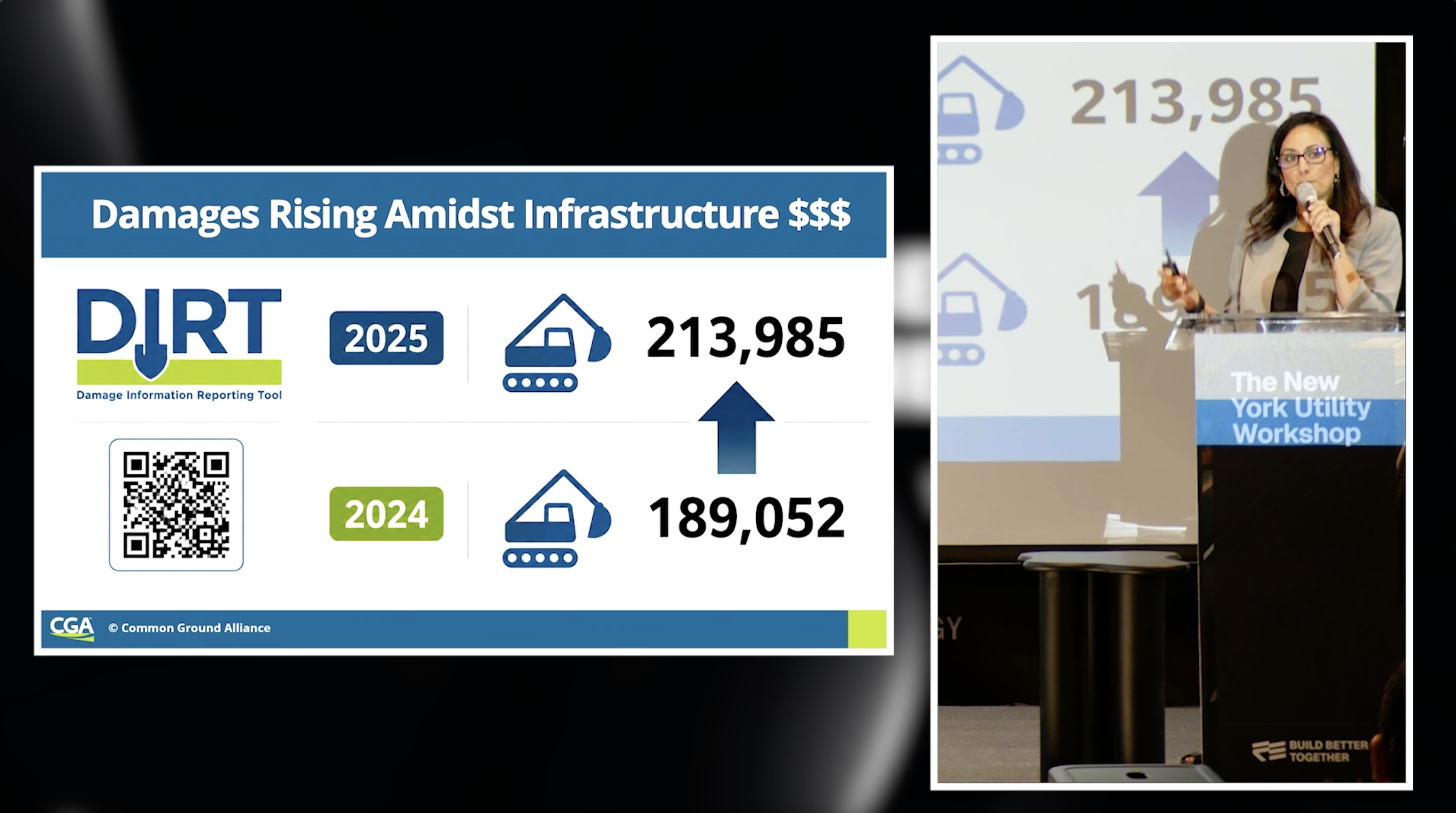
Three years into a five-year industry pledge to cut utility damages in half, the 2025 DIRT Report shows they’re actually rising. We asked 150+ infrastructure leaders in New York why, and what the industry can do to get the numbers moving in the right direction.
Chris Garafola
.svg)
August 10, 2026

Here's What's New in 4M: July 2026
July brought two updates that give teams more visibility and more ground to work with: a new Admin Dashboard for tracking usage and adoption at a glance, and Foundation Data live in Massachusetts, another step on 4M's path to nationwide coverage by the end of the year. Here's what's new.

Nicole Heger
July 31, 2026
Our Newsletter
Join 7k infrastructure professionals
Get monthly insights on ways to build smarter, faster and safer with Utility AI.