Utility Damages Are Rising — And the Fix is Simple, But Not Easy
Written by
Chris Garafola
Published on
.svg)
August 10, 2026
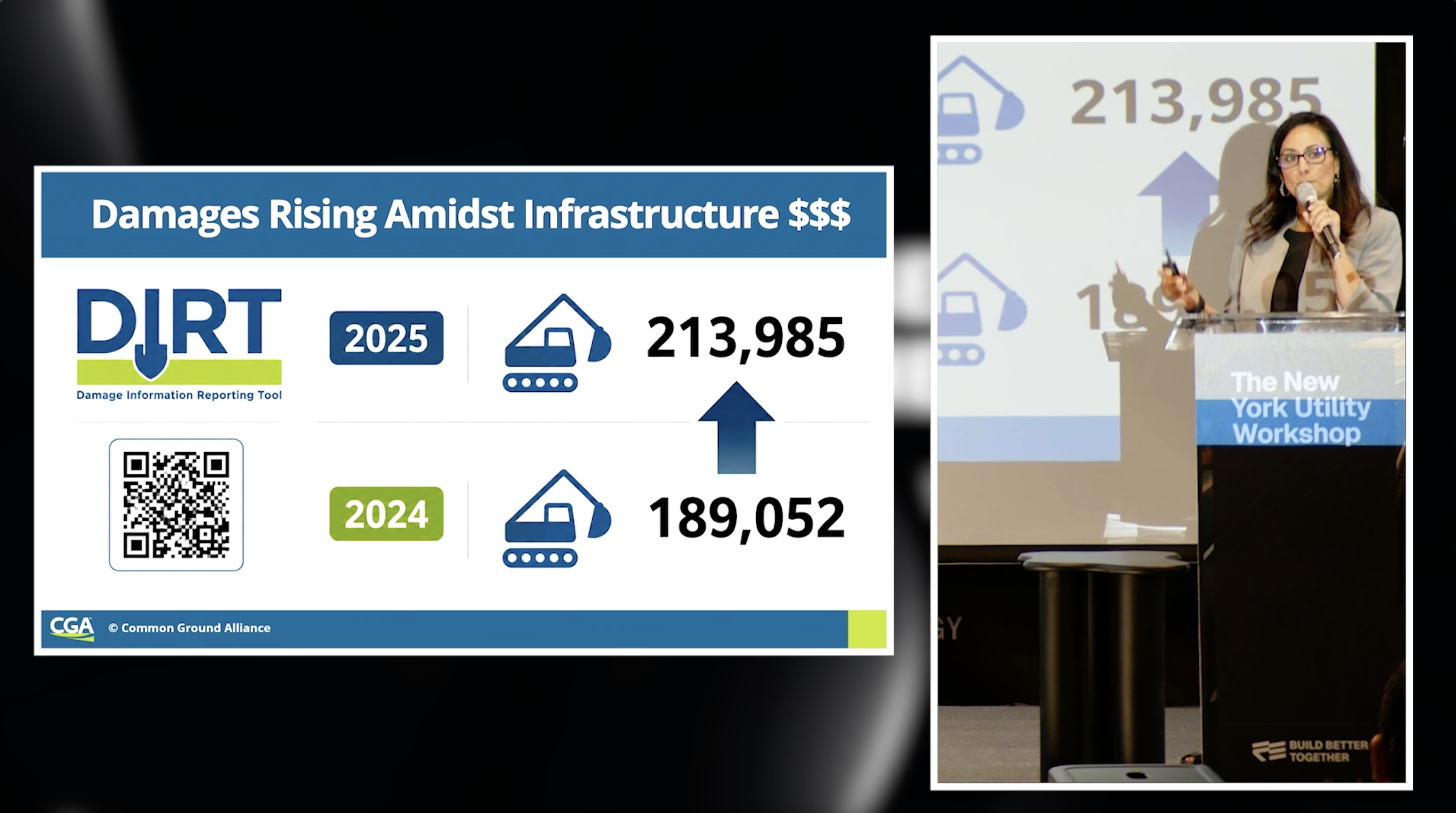

Table of contents
Our industry made a promise in 2022: cut utility damages in half in five years.
Three years in, the trend is going the wrong way. The Common Ground Alliance’s 2025 DIRT Report logged a record 221,717 damages last year, and damages per 811 notification are now running above the 2022 baseline against which the pledge was measured.
There’s good news in the report, too: damages from failure to notify 811 fell 2.2%. That’s evidence that the awareness campaigns are working, and people are making the call. But damages from unmarked or inaccurately marked facilities rose by 2.9%, erasing that gain.
Rising damages aren't a locator problem
So the industry is getting better at making the 811 call, but worse at what happens after it.
While these increased errors are categorized as locator errors, they’re not the locators’ fault. Locators are working long hours to keep up with rising ticket volume as construction picks up, and nobody can mark accurately with unreliable data. The error traces back to the data they’re handed—records that are incomplete, unreliable, or missing. Damage prevention lives in the gaps between people, data, and technology, and sometimes those gaps are more like canyons.
That's the simple part: better data, tighter handoffs, shared accountability. The difficult part is that no single stakeholder can deliver any of it alone.
One room, one goal
Building bridges over those gaps is what we set out to do at the New York Build Better Together Utility Workshop. More than 150 infrastructure leaders filled the room: utility owners, engineers, contractors, public agencies, technology partners, and some of the most respected voices in damage prevention and pipeline safety.
We covered the keynote and the panel discussions in our recap of the day. What we didn't capture there was what people said between the sessions. So instead of telling you what the day meant, we asked the people in the room. Here's what they told us, in their own words.
The failure lives in the handoffs
Ask people who work in damage prevention where things go wrong, and almost nobody points to a single bad decision. They point to the seams.
Max Tuttman, vice president at Ad Hoc Group, put it plainly: “I think where mistakes happen is in all of the handoffs and in all the coordination. In any process, the tighter the loop, the more effectively information flows. It's the information gaps where mistakes happen.”
Those gaps exist regardless of asset type, which is why getting everyone in the room together mattered. Steven Fleming, senior supervisor of damage prevention at National Grid, described what it was like to compare notes across utilities: “For all of us to get together to see the advancement of future technology in preventing damages, and for us to get to see how it impacts each utility differently, but ultimately the same. Because it doesn't matter: a damage is a damage, regardless of what utility it is to.”
Damage prevention is a shared responsibility, not one team's job
If the failure is distributed, the fix has to be too. Sarah Magruder Lyle, president and CEO of the Common Ground Alliance, kicked off the day with an inspiring keynote address that directly addressed how everyone can work better together to reduce utility damages.
“Damage prevention is a shared responsibility. That means all the stakeholders have to be accountable to each other," she said. "One of the really great things about this event is that everybody is together, and everybody is talking about their part in the damage prevention process—that when leadership says yes, everybody else says yes.”
Getting all of those stakeholders in the same room is rarer than it should be. Richard Jones, Chief Engineer at the NYC Department of Design and Construction, has spent enough time in industry rooms to notice: “It's rare that you get the engineering consultant side and the contractor side in the same room. It's usually one or the other, whichever side of that industry, but we got all three sides in there at once.”
Knowing the process isn't the same as fixing it
Everyone in damage prevention knows what the process is supposed to look like. Knowing it hasn't been enough to bring damages down.
“One of the most exciting things I saw today was the CGA presentation," Tuttman noted. "I think it really helped illuminate the gap between what folks ought to be doing and what they are doing, and how we really need to not lean on what folks ought to be doing as an excuse to not create better systems and processes.”
Jones took the same point from the keynote: “The most interesting part was the first talk from the Common Ground Alliance on how we should be thinking more about how we manage damage, and how, instead of worrying about where we are, looking at where we need to be.”
That's a harder conversation than cataloging what's broken, and it's the one the workshop kept returning to. As Magruder Lyle described it: “This event was about what we can do, not what we can't do or the roadblocks. This was about how we can make progress together.”
Come find us at the next one
Tuttman's advice to anyone on the fence was clear: “I think if you want to be part of the future of where this industry is going, it's important to be part of these conversations. Things are evolving quickly, and you're not going to get a better opportunity to see where it's going than one of these Build Better Together events.”
Massoud Tahamtani, a 4M advisor who has spent a career in pipeline safety, was blunter: “I suggest—I recommend actually—that all those who are involved in utility construction, other types of construction, and utility protection be at events like this to learn about the technologies that are available today to help prevent the next damage to their facilities.”
Our next Roadshow in the ongoing series is coming soon: follow us on LinkedIn for updates so you don’t miss it.
FAQs
How many utility damages were reported in 2025?

The Common Ground Alliance (CGA) reported 221,717 utility damages in 2025, the highest annual total since it began tracking damage data through its DIRT (Damage Information Reporting Tool) program. The organization's 2025 findings also showed that the CGA Index increased to 102, surpassing the 2022 baseline set when the industry launched its 50-in-5 initiative to cut utility damage in half over five years. This indicates the industry is not currently on pace to meet that goal.
Why are utility damages rising if more people are calling 811?
More excavators are notifying 811 before digging, but the biggest challenge has shifted to what happens after the ticket is submitted. In 2025, damages attributed to failure to notify 811 declined by 2.2%, while damages caused by unmarked or inaccurately marked facilities increased by 2.9%. The data suggests that improving locate accuracy and marking quality is now one of the industry's biggest opportunities to reduce utility damage.
Are rising utility damages a locator problem?
No. Locators are absorbing rising ticket volume as construction picks up, and nobody can mark accurately with unreliable data. The root cause lies upstream of having bad data. Too often, the info that locators receive is incomplete, unreliable, or simply not communicated effectively by facility owners.
What is the Common Ground Alliance's five-year damage reduction goal?
The Common Ground Alliance's 50-in-5 initiative aims to reduce damage to buried utilities by 50% within five years, using 2022 as the baseline for measuring progress. As of 2025, the industry's CGA Index has risen above that baseline, indicating that utility damages are increasing rather than declining and that the industry is not currently on track to achieve the goal.
What is a Build Better Together workshop?
Build Better Together is 4M's event series that brings utility owners, engineers, contractors, public agencies, and technology partners into one room to discuss how we can Build Better Together by aligning people, data, and technology to get the job done.
Recent blog posts

.png)


Here's What's New in 4M: July 2026
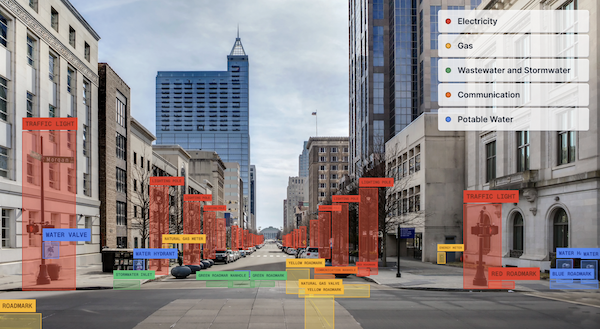
July brought two updates that give teams more visibility and more ground to work with: a new Admin Dashboard for tracking usage and adoption at a glance, and Foundation Data live in Massachusetts, another step on 4M's path to nationwide coverage by the end of the year. Here's what's new.
Nicole Heger
.svg)
July 31, 2026
Our Newsletter
Join 7k infrastructure professionals
Get monthly insights on ways to build smarter, faster and safer with Utility AI.