How VRX Gains Utility Intelligence Without Extra Overhead
Written by

Chris Garafola
Published on
.svg)
April 2, 2026


Table of contents
For engineering firms managing infrastructure projects, getting reliable utility data has always been one of the most time-consuming and frustrating parts of the project lifecycle. In this episode of 4M in 10M, host Chris Garafola sits down with Jon King, Vice President of Engineering and Project Manager at VRX, to talk about how his team has moved from weeks of phone calls, site visits, and unanswered records requests to getting comprehensive utility maps in hours — and what that shift means for project planning, budgets, and field safety.
How is VRX speeding up utility data collection?
While the days of having to go down into a vault and dig through stacks of plans to find utility data are gone, it’s still a problematic process even for big, established firms like VRX. And they had mostly accepted this as the status quo.
“We have the same issue a lot of consultants have: utility data is hard to come by,” King says. “It takes a lot of effort to get it. So when we were approached by 4M, we were skeptical at first.”
King and his team weren’t sure that 4M’s utility data could really solve the issues they had. So they put it to the test. They had a project that was already mapped using traditional SUE quality levels, and they compared that to a map from 4M’s platform.
The results were striking. It took them months to get the traditional utility data into a format they could deliver to a client. It took less than a day with 4M. And the data from 4M matched the data they received directly from utilities and municipalities, delivering the same reliability, faster.
Just to make sure it wasn’t a one-off, King’s team even mapped the area around their own office with 4M’s platform, because they know exactly where all the utilities are there too. The same fast, reliable results came back. “It really proved itself right from the beginning,” King says.
VRX has now been a 4M customer for almost four years. In that time, they’ve seen even more improvements in data quality and speed. “It's only getting better: it's getting faster, more accurate,” King notes. “Back when we first started, it was almost half a day to a day to get data in. And now it's literally a click of a button and data pops up, which is amazing, especially when you're working on projects where you need that data today. It’s game-changing.”
Where is VRX seeing the biggest impact from 4M’s utility data platform?
A recent aviation project offers a concrete example of how having reliable ai-powered utility intelligence at the click of a button had a major impact on VRX.
King had an airport client looking at a currently vacant piece of land for a future land development. They wanted to estimate how much it would cost to get utilities to that site for planning purposes. After waiting for weeks without results for utility location data requests, which is typical, the client turned to VRX and asked if they could get that information ASAP. King is located more than four hours away from the site, so it wasn’t possible to get out there that quickly and look for manholes, overhead lines, and pipeline markers himself.
“So we went and ran 4M on it,” King says. “We were able to get linear feet, overhead lines, all the natural gas pipelines that were in the area, telecoms that were there. And so we were able to come up with a preliminary utility routing to serve the site enough to give him an estimate of how much his utility costs would be, if there were any relocations that were needed, and where his utilities were coming from.”
King delivered all of that information and a resulting cost estimate for utility relocations to the client within 48 hours. “This was something that, before we had 4M, wouldn't have even been possible for me to do within that type of time limit, given the amount of information that we received and where the sources came from.”
When they put the 15-acre site into the platform, they saw a transmission line running through the site that didn’t have manholes, meters, or valves within that site. If they had relied solely on boots on the ground, they might have missed that line because there was nothing visual to indicate it was there, and the utilities weren’t responding to the records request. 4M’s platform provided VRX with more than just speed: it also gave them a comprehensive set of utility data, enabling them to provide their aviation client with confidence in their estimate.
Why 4M’s utility data supports planning for projects of any budget
King notes that sometimes VRX has design projects where the budget covers only record research — not a full SUE investigation. Using 4M’s platform has helped mitigate risks on those types of projects by getting utility data backed by multiple sources of evidence.
.png)
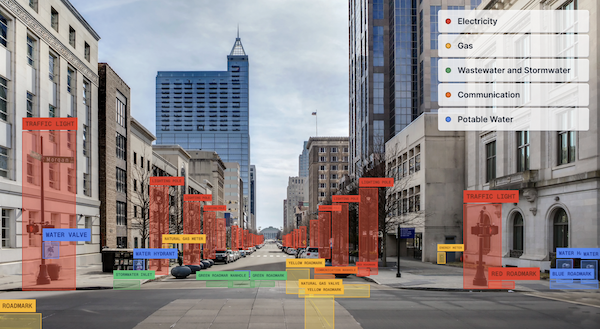
The object detection feature in 4M is a vital part of the design process for VRX. “If we see manholes and water valves, we typically know there's probably gonna be some type of utility that's between those handles,” King says. “Having object detection helps get that alignment more in tune to where it is actually in the field.” The ability to see road markers has also helped them further zero in on that alignment in the field without getting boots on the ground: it gives VRX evidence of where a utility has been physically located by either a level B or level A type activity.
When King’s team is doing a feasibility study, they don’t always want to pay to have survey go out since it’s not a project that is guaranteed yet — the same applies for conceptual studies and land studies too. It saves them both money and time to do the initial research with 4M to see where utilities might affect a potential route.
And getting all this information while sitting in the office, rather than going out into very tight corridors with high traffic, helps King keep his team safe. It’s not that they’ll never need to go out in the field again: it’s that they now have better data faster to help them build together with their clients, on budget and with fewer safety risks.
The 10-second takeaway:
When you can see what's in the ground from day one, every decision downstream on projects of all sizes and budgets gets better.
Watch the full episode to get the deep dive on how King is using 4M’s instant, reliable utility data to provide better client experiences, plus his dream historical infrastructure project and more.

Recent blog posts


.png)

Utility Damages Are Rising — And the Fix is Simple, But Not Easy
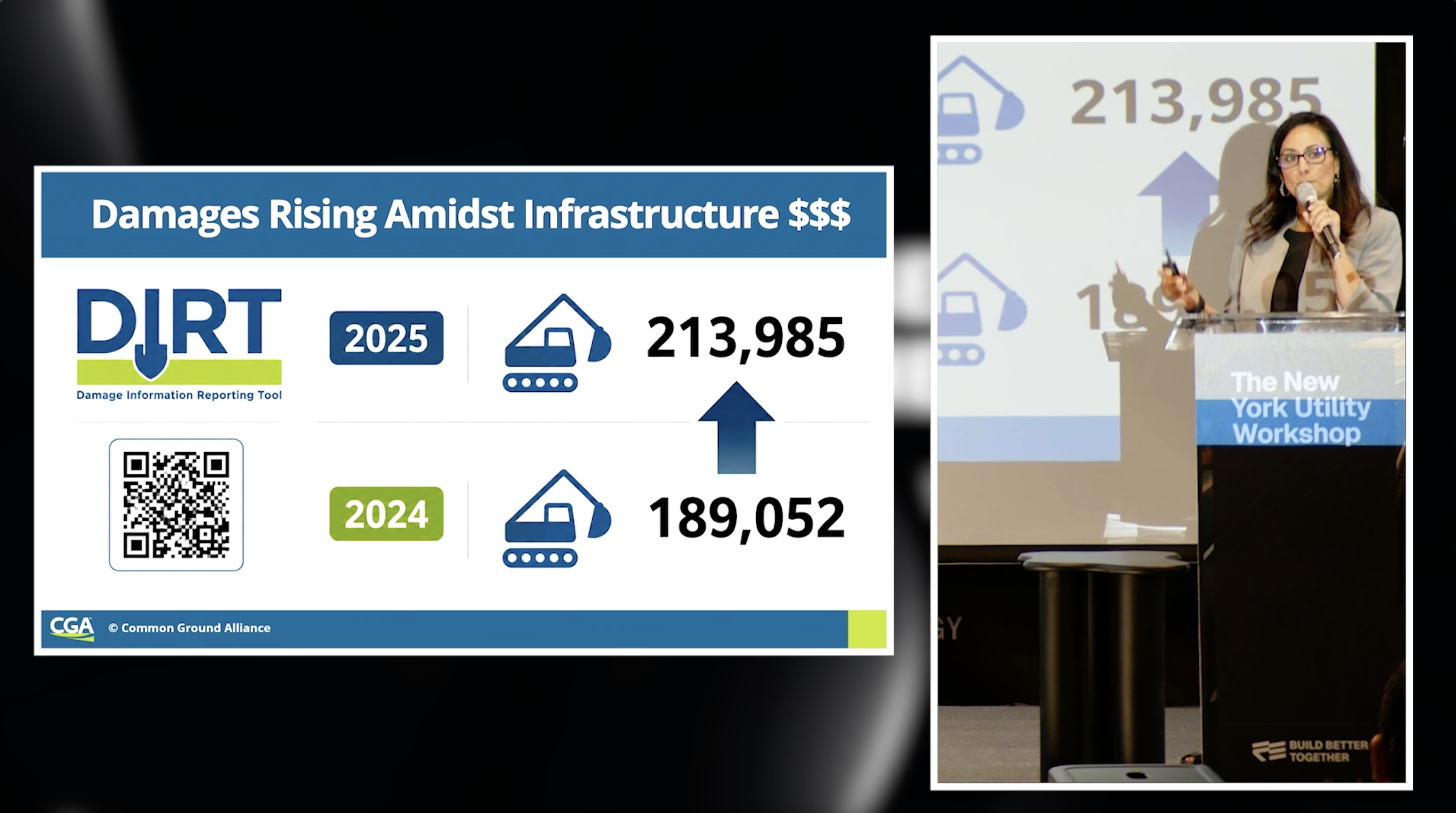
Three years into a five-year industry pledge to cut utility damages in half, the 2025 DIRT Report shows they’re actually rising. We asked 150+ infrastructure leaders in New York why, and what the industry can do to get the numbers moving in the right direction.
Chris Garafola
.svg)
August 10, 2026
Our Newsletter
Join 7k infrastructure professionals
Get monthly insights on ways to build smarter, faster and safer with Utility AI.