4M Delivers Utility Intelligence For Minnesota Department of Transportation
Written by

Tamar Shafrir
Published on
.svg)
May 11, 2026


Table of contents
AUSTIN, TX — 4M Analytics (“4M”), the utility data platform for infrastructure intelligence, announces today that the Minnesota Department of Transportation (MnDOT) is now using 4M’s utility data to plan, build, and operate its statewide transportation network. In 2026, MnDOT will tackle over 200 road construction projects at a total cost of about $1.5 billion, creating an urgent demand for comprehensive, reliable, and instantly available utility data in order to carry out its capital program.
Until now, collecting utility data across MnDOT’s 12,000 miles of highway infrastructure has required significant time and labor resources, from records research to on-site locating. Incomplete, inaccurate, and inaccessible utility data negatively impacts the abilities of planners, engineers, and contractors to carry out their work with due diligence. The total cost of delays, damages, and relocations associated with unknown utilities can rise to over $1 million on a single transportation project in Minnesota. But now, by incorporating 4M’s utility intelligence into existing workflows, MnDOT is better equipped to mitigate risks, improve utility coordination, and deliver more projects on time and on budget.

4M is the leading platform for utility intelligence and the most comprehensive and up-to-date utility data set available for US infrastructure. 4M uses AI to collect and georeference millions of utility records from GIS, blueprints, as-builts, and permits; detects utility objects (manholes, inlets, poles, hydrants, and more) from satellite and street-level imagery using computer vision; and generates lines based on network topology without the need for records. Unlike traditional utility locating, 4M’s data is collected 100% remotely, making utility locations available to project stakeholders long before they put boots on the ground.
In early pilots, 4M demonstrated real-world value in keeping with MnDOT’s mission to operate a safe, convenient, efficient, and effective transportation system. 4M’s independently collected data showed greater than 60% overlap with MnDOT’s records, and 4M successfully verified over 90% of utility features through object detection. Over the next year, MnDOT will implement 4M’s data on 500 different project sites across the state, giving stakeholders access to the latest utility intelligence and ensuring that utility data is retained across every phase of the project lifecycle, operations, and maintenance.

Itzik Malka, CEO and co-founder of 4M, added, “Utility intelligence means reducing risk, solving conflicts, and preventing damages based on the most advanced data available for every project site, while significantly lowering the time, costs, and safety hazards associated with collecting that information manually. By augmenting standard methods with AI-powered utility data, MnDOT is pioneering a new protocol for public agencies to build and operate roads, safely and cost-effectively.”
About 4M
4M is the utility data platform for infrastructure intelligence. Powered by proprietary data and AI, verified by geospatial experts, 4M delivers instant, reliable utility intelligence you can trust, validate, and access across teams, technologies, and workflows. Trusted by WSP, Stantec, AtkinsRéalis, HNTB, MasTec, TxDOT, GDOT, Michigan DOT, MnDOT, and CDOT, 4M enables teams to identify risks earlier, keep crews safer, and deliver projects on time and on budget. Founded in 2019, 4M is backed by Insight Partners, Viola Ventures, and Waze’s former CEO. Learn more at www.4manalytics.com.

Tamar Shafrir
A dedicated researcher that doesn’t stop investigating until she reaches the truth, no matter how hard it is to accept or comprehend (and there are a lot of those in our industry). Tamar took her first career steps in architecture and design, both as a practitioner and a journalist. Throughout her journey, her curiosity has taken her all across the globe, from North America through Europe to the Middle East, discovering and explaining the micro and macro challenges of the industry. Today she focuses most of her efforts on unlocking the challenges of the subsurface, through research and education.
Recent blog posts


.png)

Utility Damages Are Rising — And the Fix is Simple, But Not Easy
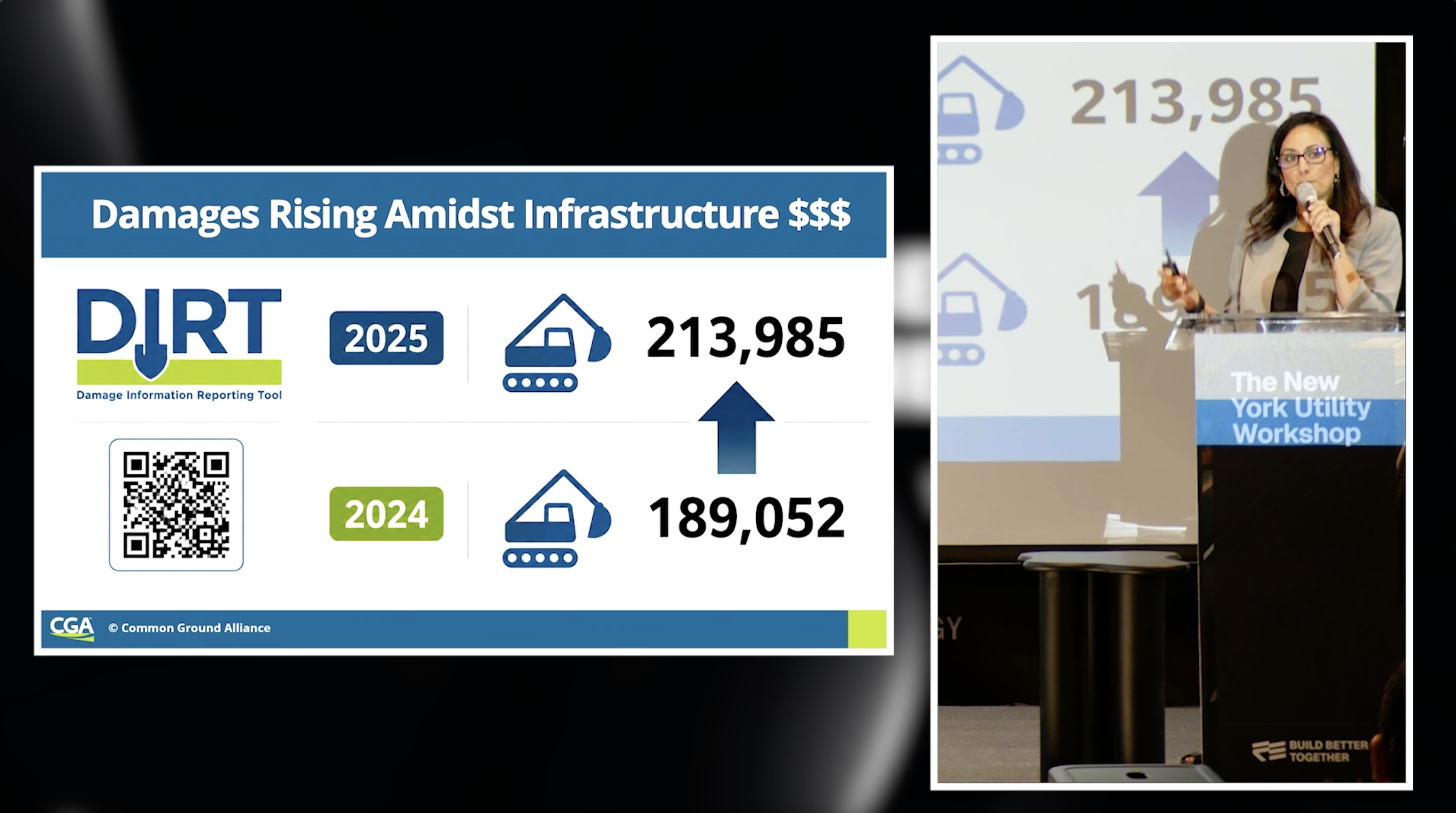
Three years into a five-year industry pledge to cut utility damages in half, the 2025 DIRT Report shows they’re actually rising. We asked 150+ infrastructure leaders in New York why, and what the industry can do to get the numbers moving in the right direction.

Chris Garafola
.svg)
August 10, 2026
Our Newsletter
Join 7k infrastructure professionals
Get monthly insights on ways to build smarter, faster and safer with Utility AI.